

Kevin’s story: Former soldier loves golf after toughest time
Standing at the top of the ski slope is a man who is blind, but he is ready to make that first move forward and fly down the mountain. It’s his choice of course, and he knows that in some ways he is fortunate to have a choice.
After his years in the British Army, for Kevin Alderton this was a leap of faith, but then so was everything after leaving military service, when he was unable to see and understand what would come next.
Today he smiles when he says that he has left the competitive skiing to the younger folk – he is now 54 – and his smile remains as we talk about what is possible in life. Kevin has not always been blind. We talk about playing golf as a blind person, and how remarkable it is that he can play well (on a good day), and how golf followed on, logically, from the act of hurtling down the slopes. A calm has now followed the storm in more ways than one.
“Having a serious accident or illness can be such a big blow but it is amazing how we can adapt,” Kevin says. “Everything is achievable if you apply yourself. You need to call on the resilience that you have; what you have done before you can do again.”
Away from his work in welfare management for the charity Blind Veterans UK, Kevin is exploring something he can do, and do well, and although golf throws up innumerable challenges for him, playing the game provides a pleasure and a personal test that on the best days is “like gold dust”.
After the ski slopes, where he was aware of the fire-bright reflection of the sun on the snow in intense competition, his recent development in golf has been set against a more peaceful backdrop of cut-grass and gentler undulation. This golfer isn’t straining for every tenth of a second as on the slopes, Kevin has the time to approach the stationary ball with his guide, consider the best option and, hopefully, to take a breath and enjoy the feeling of a good swing and clean contact with the golf ball.
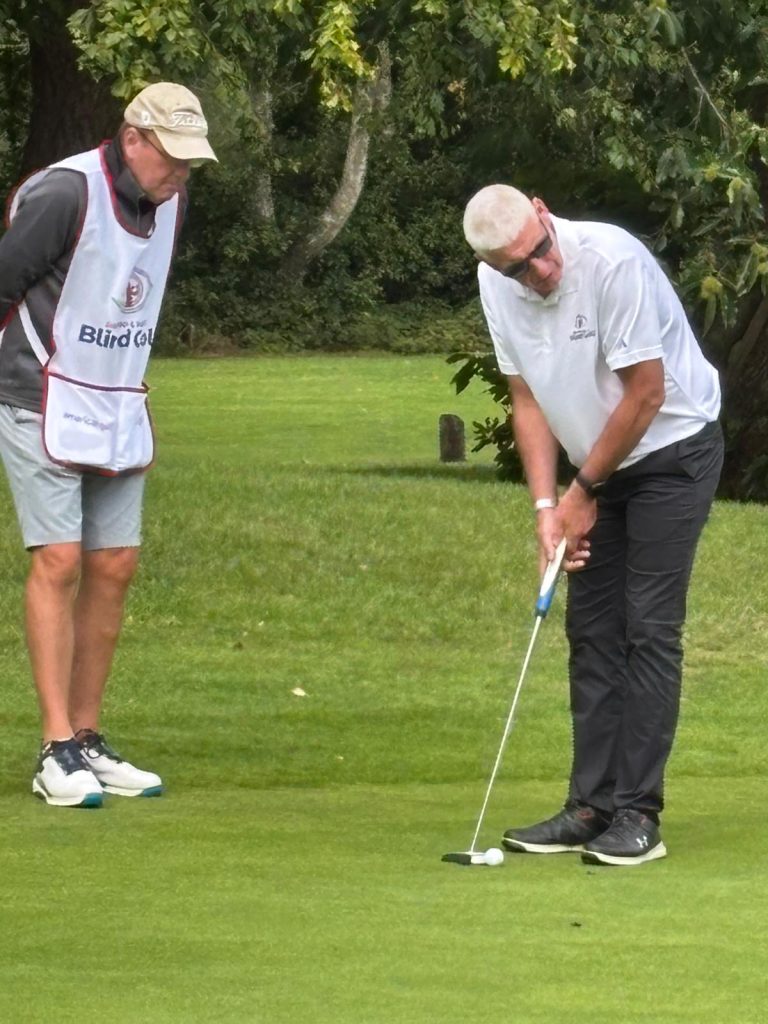
The fresh air can still be consumed, the smell of the grass and trees replaces that of mountain ozone perhaps, the nature appreciated; the exercise and the camaraderie with friends continues. For both sports Kevin has needed a guide, but in both, as in his wider life, he also knows so much of it is down to himself.
By his late twenties Kevin had taken part in multiple deployments in war-torn countries, and he had already lost three close friends in action. He says that in the beak times, he had carried on living partly because his friends didn’t get to make that choice.
Kevin had served in the First Battalion of the Grenadier Guards in the British Army for 14 years. He was a fit, active and disciplined young man who loved playing rugby, and apart from the skiing Kevin was a handy middleweight boxer.
Unusually, for a Londoner from Bermondsey not far from the Old Kent Road, Kevin took to skiing straight away as a tall, slim but strong teenager, after discovering the then dry ski slope at Woolwich Barracks near to his home. So much so that he qualified as a ski instructor at 16 and would go on to ski for his regiment and eventually the British Army team.
In 1999, aged 28, he was promoted to be an Infantry Platoon Sergeant in charge of 28 men. It was a huge achievement, recognition for his professionalism and leadership. This was a tight, closely-bonded unit of soldiers.
In that same year, while in London one night, he tried to break up a fight outside a nightclub where a young woman was being attacked in the street. He instinctively took on the group of attackers. One of the men grabbed Kevin from behind and gouged at both his eyes, causing horrendous, permanent damage.
Kevin needed surgery, careful rehabilitation and good counselling. He was medically discharged from the Army in 2001, aged just 30, having PTSD which can still encroach on his life to this day.
His left eye can see the difference between light and dark with a sense of the spaces ahead: his right eye affords around eight percent vision. A man trained to defend others, the soldiers alongside him, shoulder to shoulder; all that had been taken away in a heartbeat, his whole career. Kevin’s Army friends tried to help of course, but in the bleak days he often sought solace at the bottom of the beer glass. It was a desperate time.
“I faced depression. I lost my sight, my job, my home, my friendship circle, my independence and in many ways the will to live,” says Kevin. “This sent me towards a very low, dark place near breaking point. At times I considered suicide. But during active service I had lost three good friends, and they didn’t have that choice whether to carry on. They couldn’t carry on, but I could, so I felt I had to do it for them. In the end, I had to sort my life out.
“So I went to the people at St Dunstan’s and said, I’m broken, and I need help now.”
In 2002 Kevin first contacted Blind Veterans UK, which was then known as St Dunstan’s, named after the charity’s site in Regent’s Park, London. They could help, and everything gradually started to change.
“At that point you have two ways to go, you overcome the problem through rehabilitation, and come out fighting, or in effect you can cease to be. But that wasn’t really a choice by then, that’s not the person I am. I owed it to my friends who didn’t have a choice, so I wasn’t going to give up.
“They impressed on me that I had transferrable skills from the Army to help me get through it. I was deployed around the world, and that all took a lot of resilience. When faced with disability you’re almost forced to find inside yourself the will to carry on.”
Thanks to expert support, Kevin found the confidence to first live with his sight loss and soon after start to think about the future. To smile when meeting friends again. The old Kevin was coming back.
Through the encouragement of skiing friends, by 2004 he started to take part in British disability skiing and would play a key role for Britain in the European and World Cups, including breaking two world records in speed skiing. “It was an absolute passion for me, incredible, I just loved being up on the slopes in cold, fresh air, it was the ultimate thrill,” Kevin explains.
He talks happily of the build-up to the big races, charting the course by ‘side-skipping’ with his guide “to build a picture of how the gates are set, where the terrain changes are, and where you could build or lose time. And the feeling of a great run was amazing!”
Kevin’s association with Blind Veterans UK also blossomed over time, to the point where 12 years ago he secured a job with the charity, and he is now a lead manager focusing on the welfare management and bespoke rehabilitation and training of working age members of the charity. In addition he also leads on a number of key projects around service personnel that suffer sight loss in service and are transitioning to civilian life.
This job, working with a highly committed team of people, has been a huge step forward, giving Kevin back that career he had lost.
“Today I deliver a rehabilitation programme to blind veterans,” explains Kevin. “I can do this from a lived experience of course. In 2002, there wasn’t quite the organised support available that there is today but back then there were still some wonderful people who helped me. It’s great that I can help people in return.”
First trying golf in 2002 during a friend’s charity day, Kevin enjoyed the experience and for the next 10 years he was an ‘occasional golfer’ playing once or twice a year with friends. Learning the game shares similarities with the rehabilitation process, explains Kevin, in that the whole idea of playing a sport doesn’t have to be the barrier it seems. “It is something you can learn. Rehab is about acceptance, about adapting before achievement. You have to find that personal resilience from your life to give yourself the time to learn to play and then enjoy the end result.”
Kevin became a member of BLESMA, a charity that supports limbless veterans, which invited him to tournaments and he started playing more regularly.
A key intervention came in 2023 from Battle Back Golf, the UK-based programme for injured service personnel, which helps to rebuild health and confidence through golf. Kevin says the support he received was “simply fantastic, from such caring people”, including Instructional Officer Zeno Gomes “who is a remarkable guy, and I owe them all so much. They not only encouraged me to push myself in the sport but have been amazingly supportive and inclusive. Since taking up competitive golf, BLESMA have been brilliant as well. Without the support of these two charities I don’t think I’d be playing, and certainly not competing.”
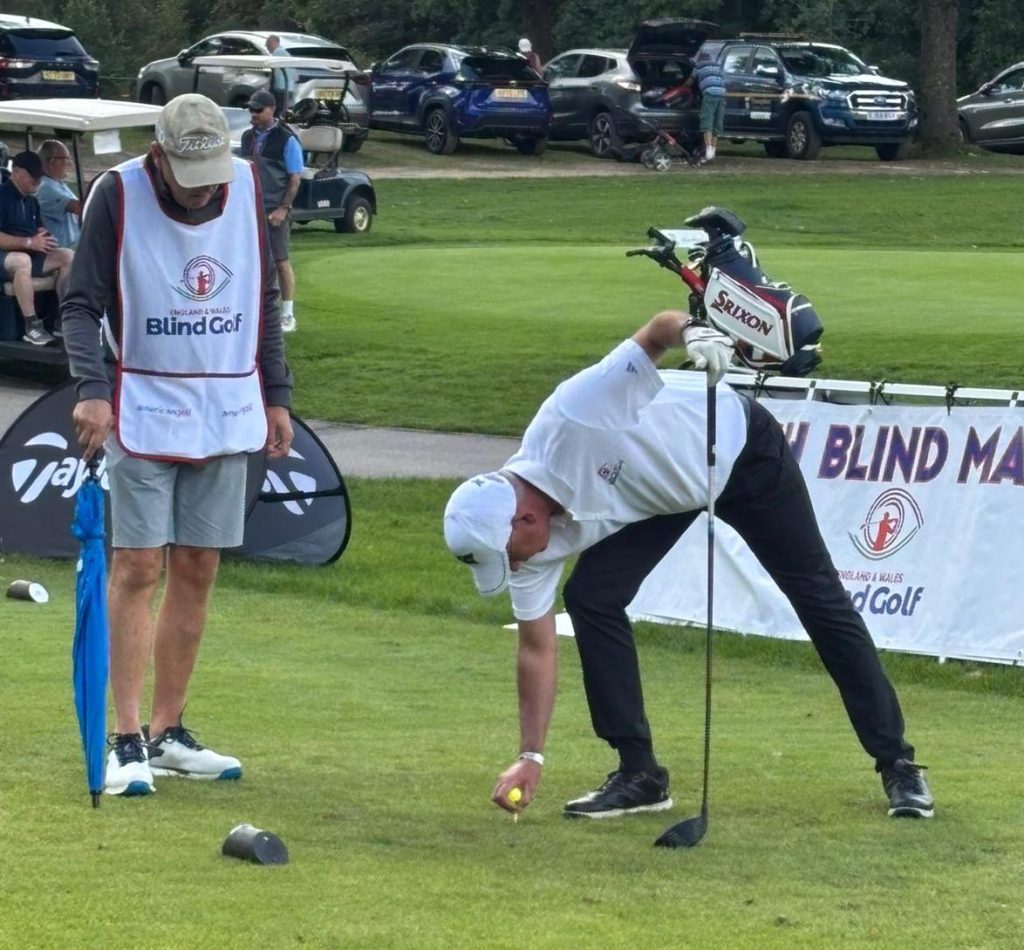
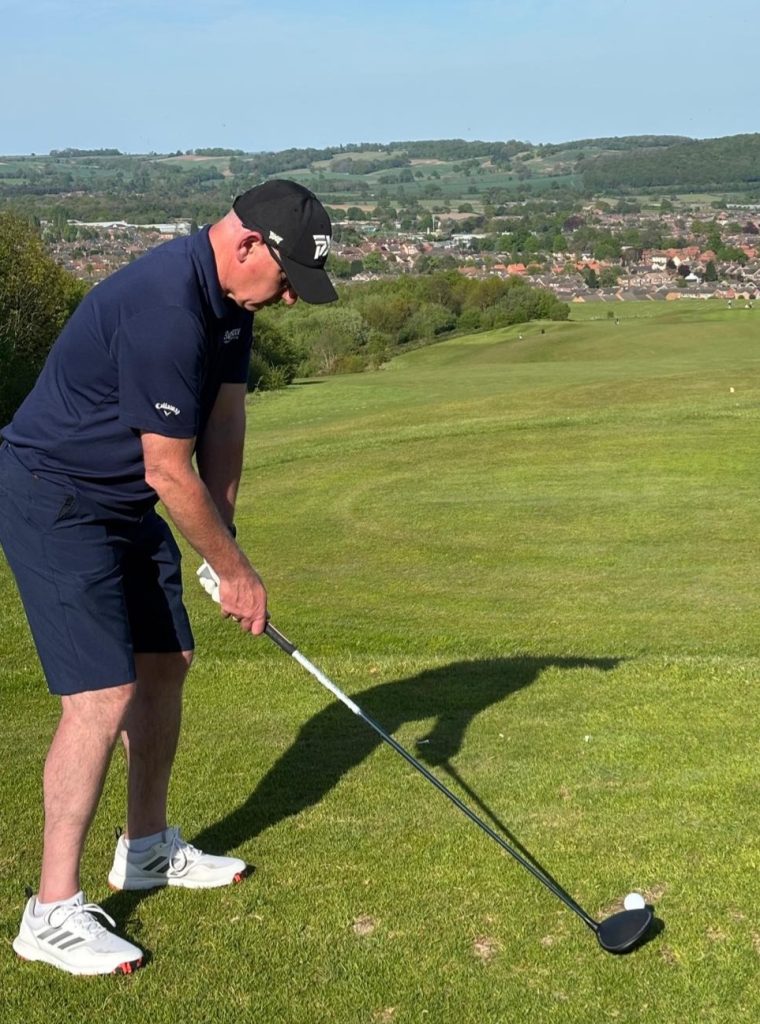
He plays with friends at Blind Veterans UK and recently started in competitions run by England and Wales Blind Golf, enjoying some success in terms of reaching a decent standard (he has a Handicap Index of around 37), winning matches, and occasionally reaching 300 yards from the tee with a well-hit drive.
Kevin says: “I have found a new love for the game through this whole process, it’s amazing really, just great for people with a disability to still be able to enjoy the fresh air, and crucially anything like this can guard against those feelings of isolation which can be very damaging.
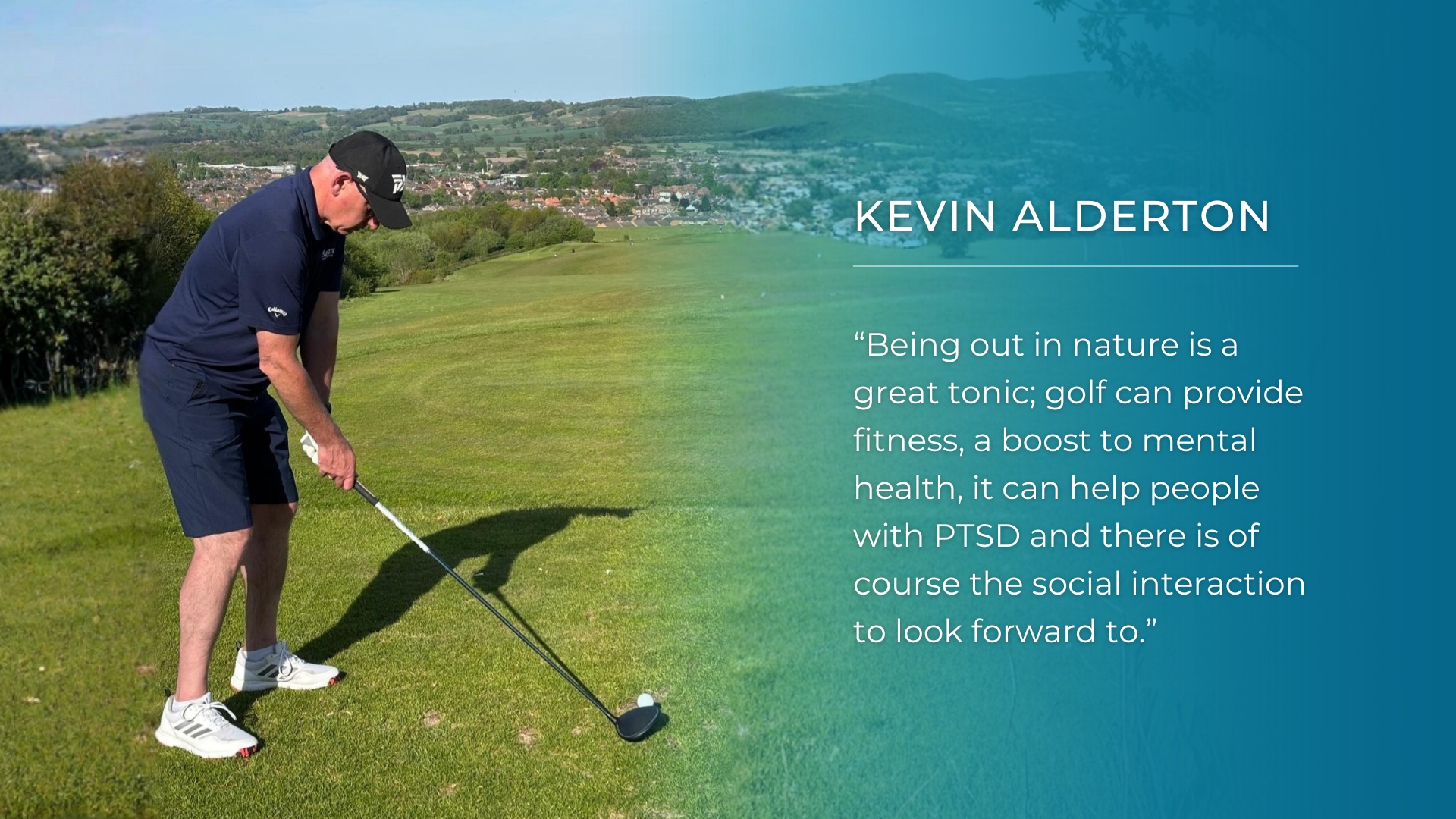
“Being out in nature is a great tonic; golf can provide fitness, a boost to mental health, it can help people with PTSD and there is of course the social interaction to look forward to.”
Kevin has faced the various challenges for people with a visual impairment who play golf, including issues with travel, access to courses, and the availability of guides. He is hugely grateful to his friend Steve Lane and other pals who have given up their time to act as his guide.
A golfer with a visual impairment often relies on a guide to help them to navigate the course, assist in aligning shots, and pass on all relevant information. Like other players, Kevin has struggled to find a guide at times, and thinks go-ahead golf clubs could get ahead of the curve here. Sight problems will also affect many older players in a club and a little time to prepare a number of volunteer guides could provide lasting benefit, for members and visiting players with visual impairment, and for the volunteers themselves as they give back to the game, all while raising the inclusive profile of the club itself.
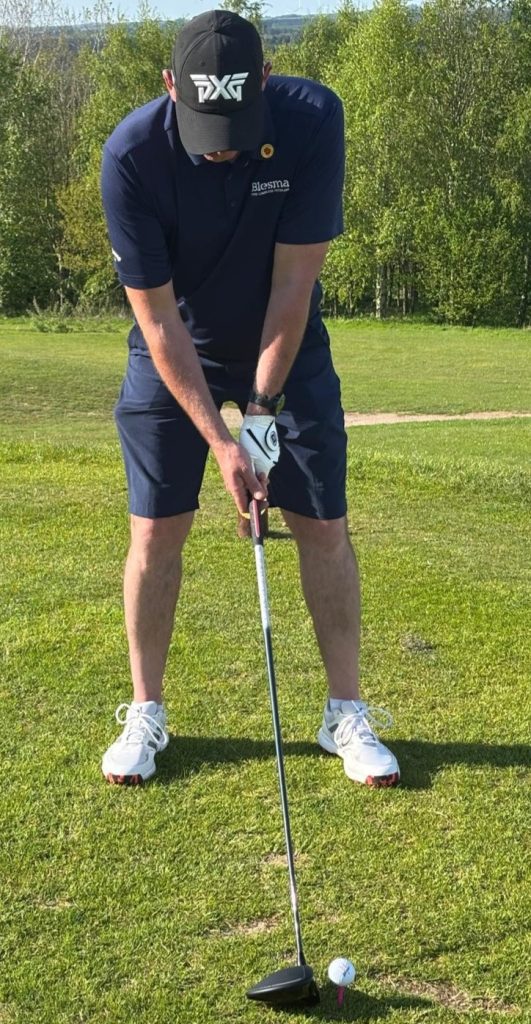
“I’m quite pleased with how I’m hitting the ball when I can play and practise,” says Kevin. “I’m now looking for a golf coach just to get to the next level. I need to work on the right kind of feeling in the swing and find a coach who understands this.
“Golf has many challenges for people with or without a disability. It’s a sport where ultimately you play against yourself. Mental resilience is a huge part of playing golf I find, and my experience and coping mechanisms I am able to apply from my skiing and military career are invaluable.
“When things go wrong on the course, you need to find composure. I find that a good sense of humour always gets me through, but when the chips are down and you need to perform then you need to concentrate, focus, and even visualise the shot you want to make. The rest is just down to your swing!”
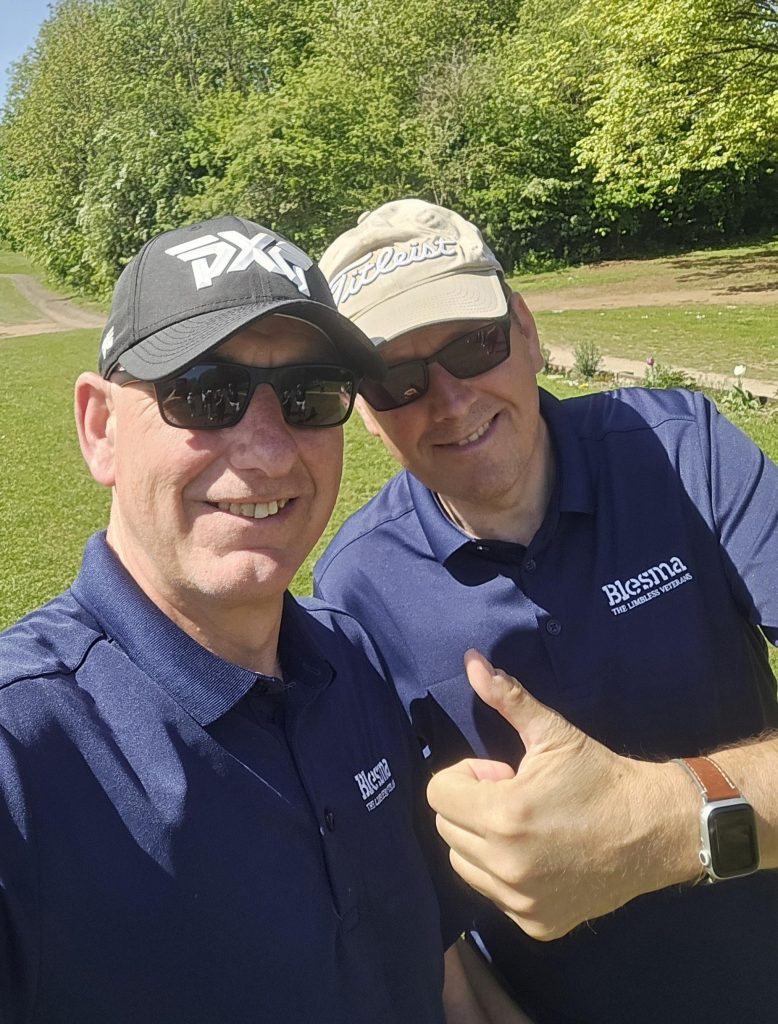
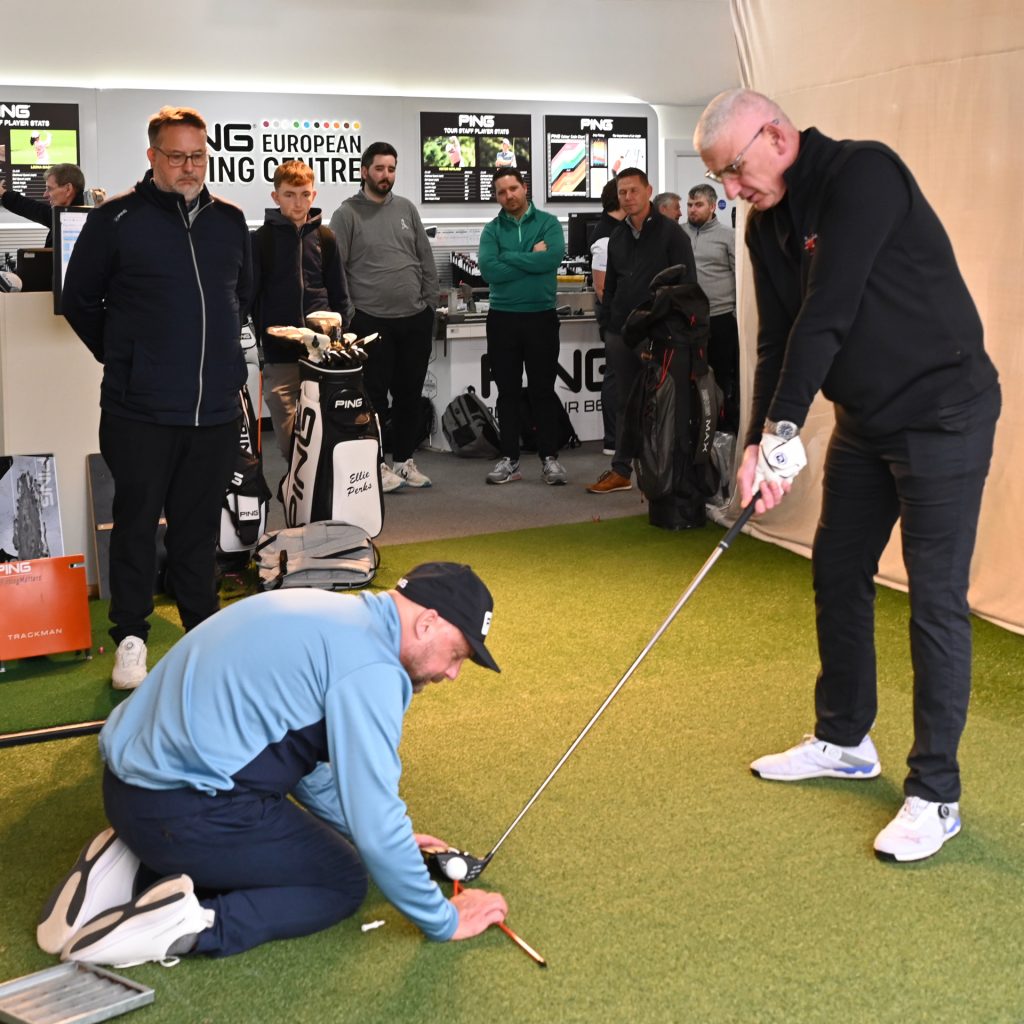
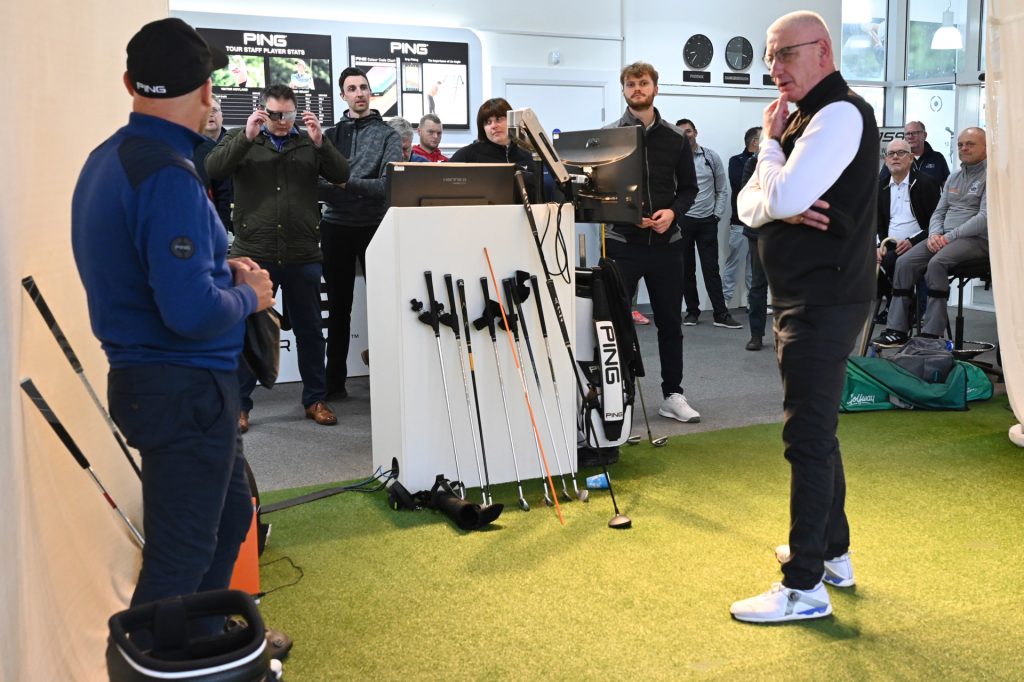
In the time ahead, Kevin says he just wants to find out how far he can go with his golf, and to help others with visual impairment. Fitting then, that near the end of 2025, Kevin was standing in a coaching bay at PING Europe’s state-of-the-art fitting centre in Gainsborough, Lincolnshire. Kevin was talking about his golf experience with EDGA’s Head of Coach Education and Instruction Mark Taylor in front of a group of enthusiastic PGA professional coaches. Mark was leading a session on the ‘coaching considerations’ needed in encouraging golfers with a range of disabilities to start or improve in golf. Kevin was present alongside other golfers through PING’s support, to help educate the coaches, while PING and EDGA were able to demonstrate their latest research in creating golf equipment to support players who have a disability.
“It was fantastic to be part of the education of coaches with EDGA and PING. And I’d like to help build a decent pathway for blind veterans in golf,” says Kevin. “I was helped so much and want to help others in return. For so many people life can get difficult but we are fortunate that we can choose the positive way forward and we should always remember that.”
NB: When using any EDGA media, please comply with our copyright conditions