

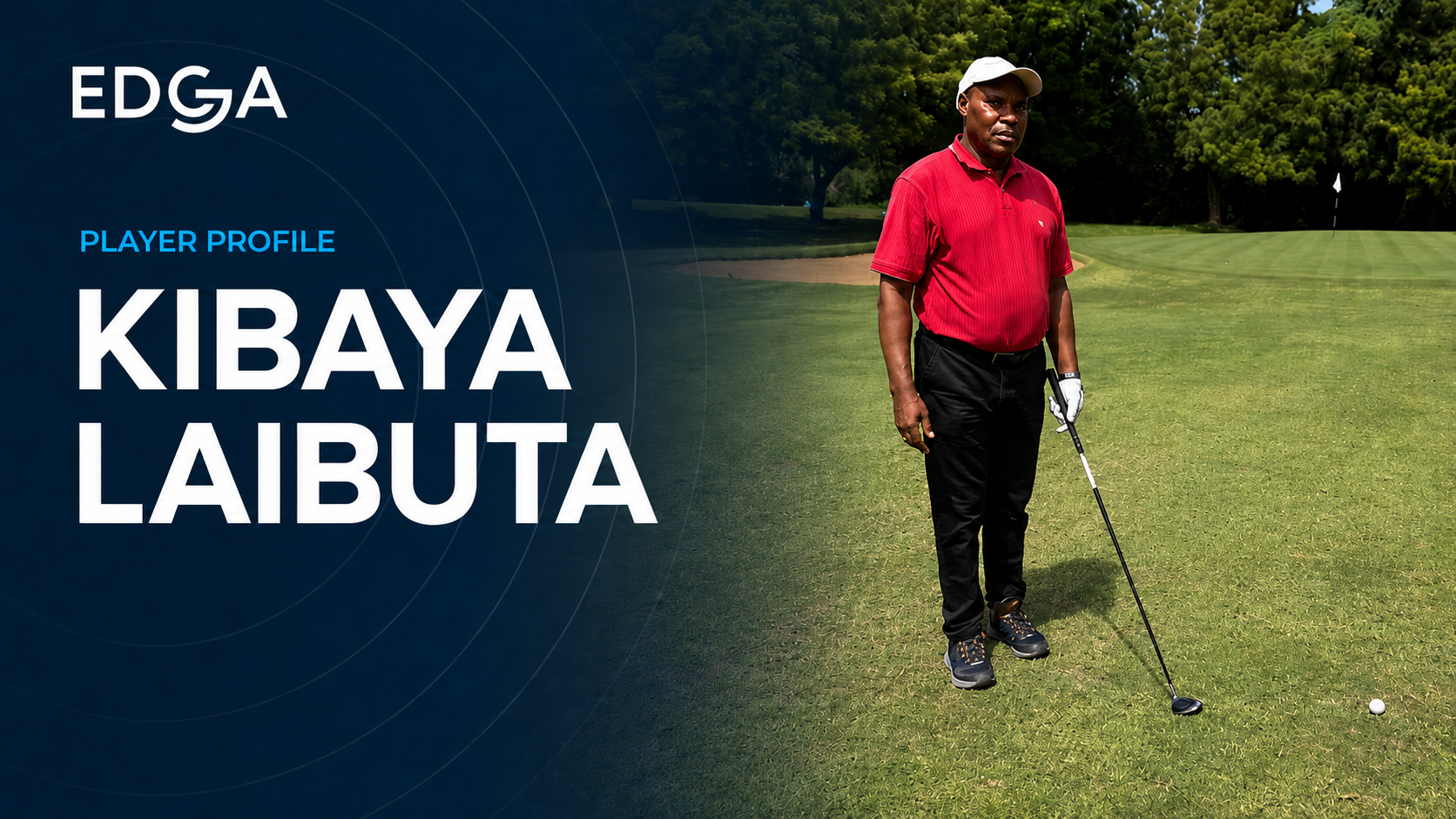
Playing the Unseen: The Blind Golfer from Kenya Who Learned to Trust the Game
There was a time when golf, for Dr Kibaya Laibuta, seemed an unlikely – if not entirely implausible – pursuit. As a young university student immersed in the rigours of legal studies, he would occasionally pass by a golf course and observe, with mild disdain, figures drifting unhurriedly across manicured fairways. To him, it appeared “a game for idlers” – a leisurely indulgence far removed from urgency or purpose.
He recounts this now with an easy laugh, the kind that accompanies the recognition of how profoundly one’s certainties can shift.
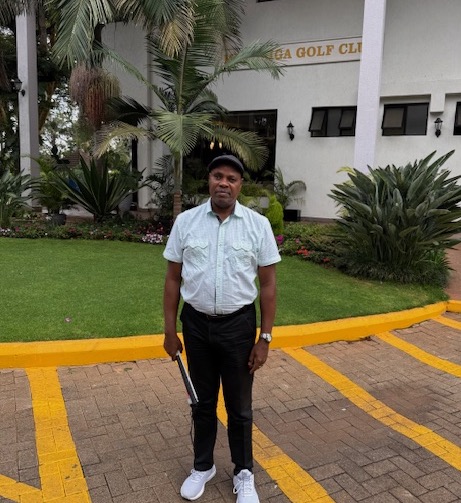
Years later, firmly established as a legal practitioner and lecturer in Nairobi, the game returned – this time through the quiet influence of friendship. Colleagues had taken to golf, and in 2005 he and his wife, Mbuli, joined Thika Sports Club. For Kibaya, however, participation remained at a distance. Having lost his sight at the age of 22 following a sudden medical complication linked to chloroquine treatment, golf was not something he imagined himself playing. Instead, he occupied the periphery: present, supportive, but disengaged. While Mbuli played, he would sit in the clubhouse, drink in hand, waiting.
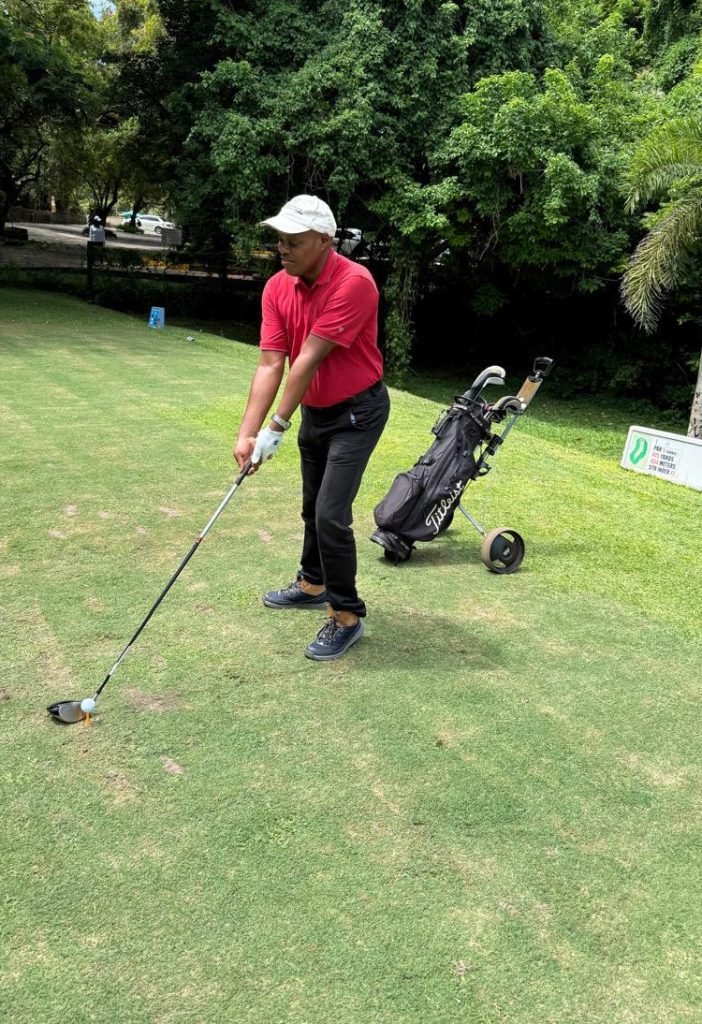
The club’s teaching professional saw possibility where Kibaya saw limitation. He urged him to try, insisting that golf – unlike many sports – began from stillness. To demonstrate, he struck balls blindfolded, illustrating that sight, while advantageous, was not indispensable. The gesture was well-intentioned, even admirable. Yet for Kibaya, hearing second-hand accounts of a sighted professional’s blindfolded success did little to inspire confidence. The gap between demonstration and lived reality remained too wide.
What ultimately bridged that gap was not persuasion, but recognition.
One day, a group of visiting golfers arrived at the club from the United Kingdom under the auspices of the Kenya Society for the Blind. They were, like him, visually impaired – and they played. Not tentatively, not experimentally, but with fluency and evident joy.
“That was when it all clicked,” he recalls. “When I saw that they could do it – and loved it – I had no reason to doubt anymore.”
From that moment, hesitation gave way to commitment. He sought coaching, embraced the discipline, and never looked back.
Learning a Game Never Seen
Even before he picked up a club, Kibaya had developed an intuitive sensitivity to the game. Walking occasionally alongside his wife and daughter, Muthoni, he learned to “read” golf through sound and movement – the crisp strike of club against ball, the cadence of footsteps toward a landing point, the subtle cues embedded in reaction and rhythm.
“They could hit these long, straight shots,” he recalls. “I was impressed with just how well they could both play.”
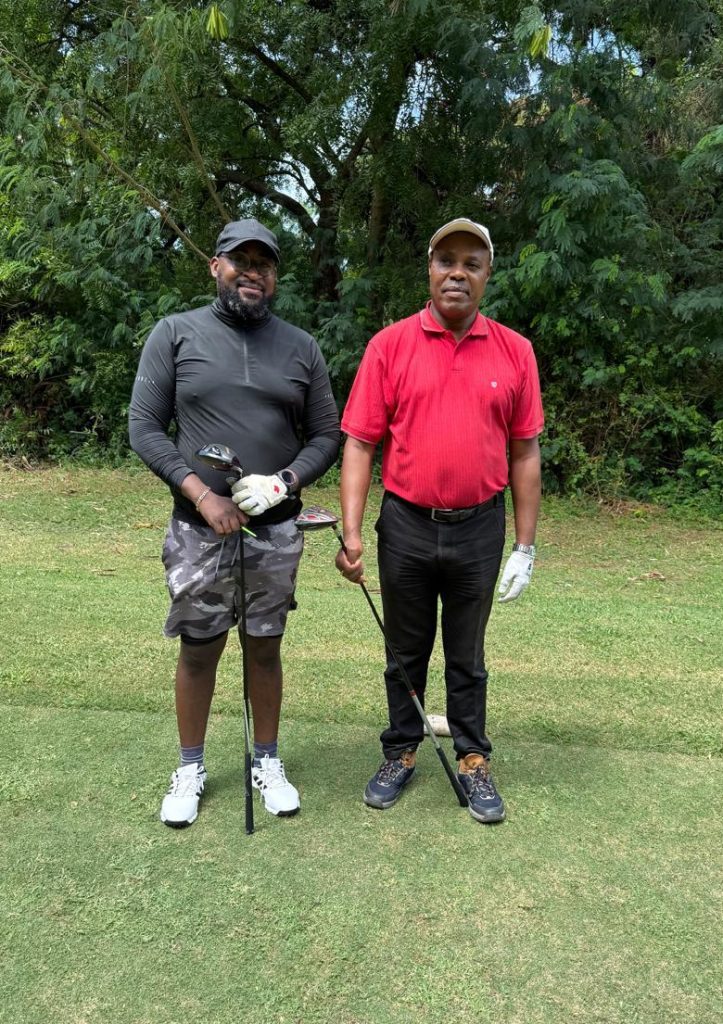
Yet learning to play required something altogether more complex: constructing an entire physical and spatial system without visual reference. Unlike many golfers, Kibaya had never watched the greats – never studied Jack Nicklaus, Seve Ballesteros, or Tiger Woods. His understanding of golf would not be inherited through observation, but built from first principles.
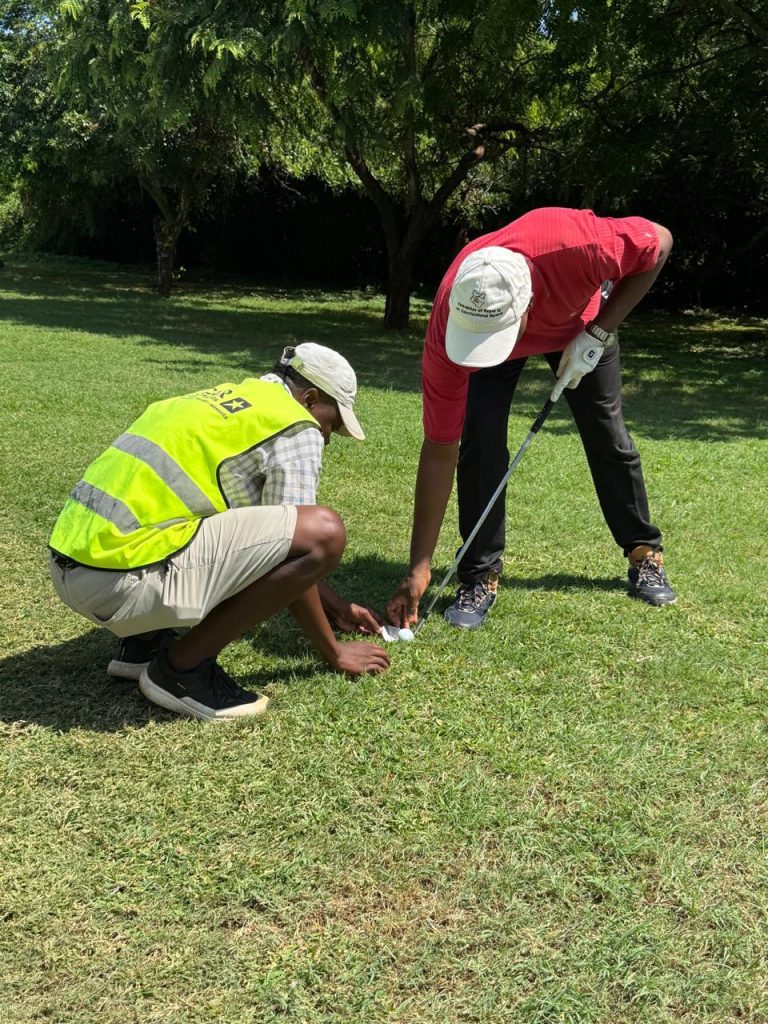
It was, in effect, an exercise in conceptual engineering.
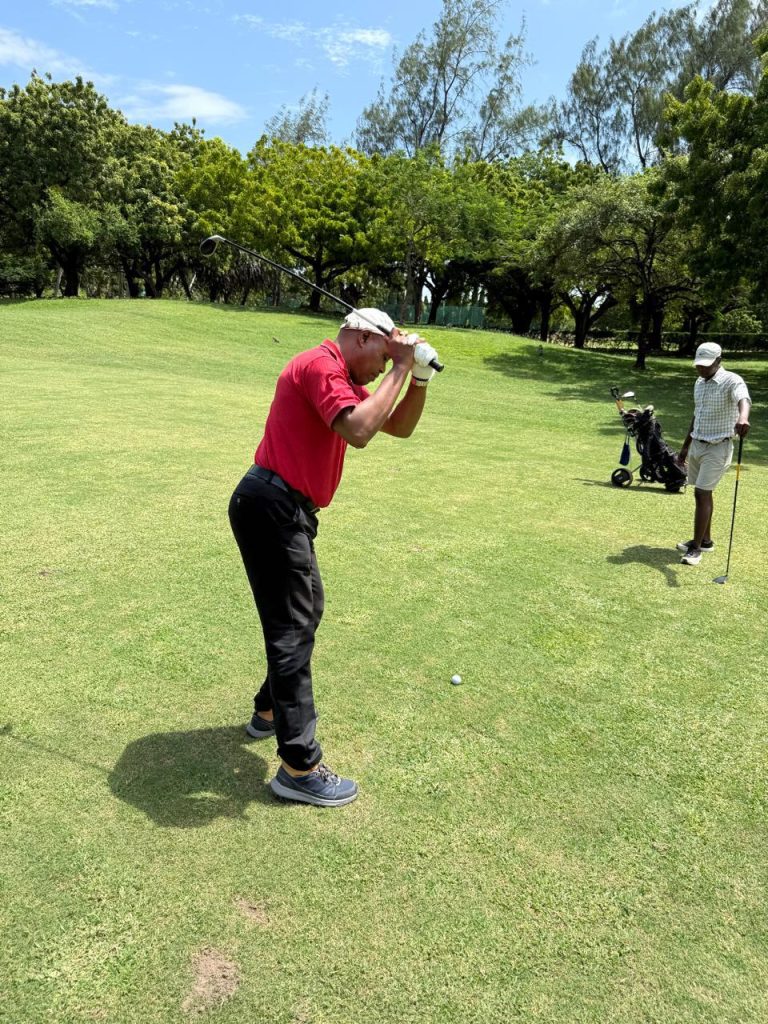
He had to imagine the architecture of a swing, internalise the geometry of stance and alignment, and translate verbal instruction into embodied motion. Early attempts were predictably difficult – missed balls, heavy strikes, misjudged contact – but persistence, coupled with patient guidance from coaches, caddies, and friends, gradually yielded fluency.
“The grip, the stance, the swing,” he explains. “Those are the fundamentals. Once you begin to understand them, everything else starts to follow.”
For a blind golfer, however, these fundamentals demand heightened sensory acuity. The hands must “see” what the eyes cannot; the body must detect and correct deviations that would otherwise be visually apparent.
“You have to be very sensitive,” he says. “Very attentive – to your stance, your distance from the ball, your backswing, your follow-through. And controlling your body movement – that is often the hardest part.”
Trust as Technique
Central to Kibaya’s development was trust – both in himself and in others. Golf, for him, is necessarily collaborative. A trusted guide or caddie becomes an extension of perception, offering alignment, describing terrain, and conveying distances, hazards, and targets in layered detail.
Where a sighted golfer absorbs information instantaneously, the blind golfer must process it sequentially, constructing a mental map of the hole.
“There is a lot to internalise,” Kibaya observes. “A lot to digest.”
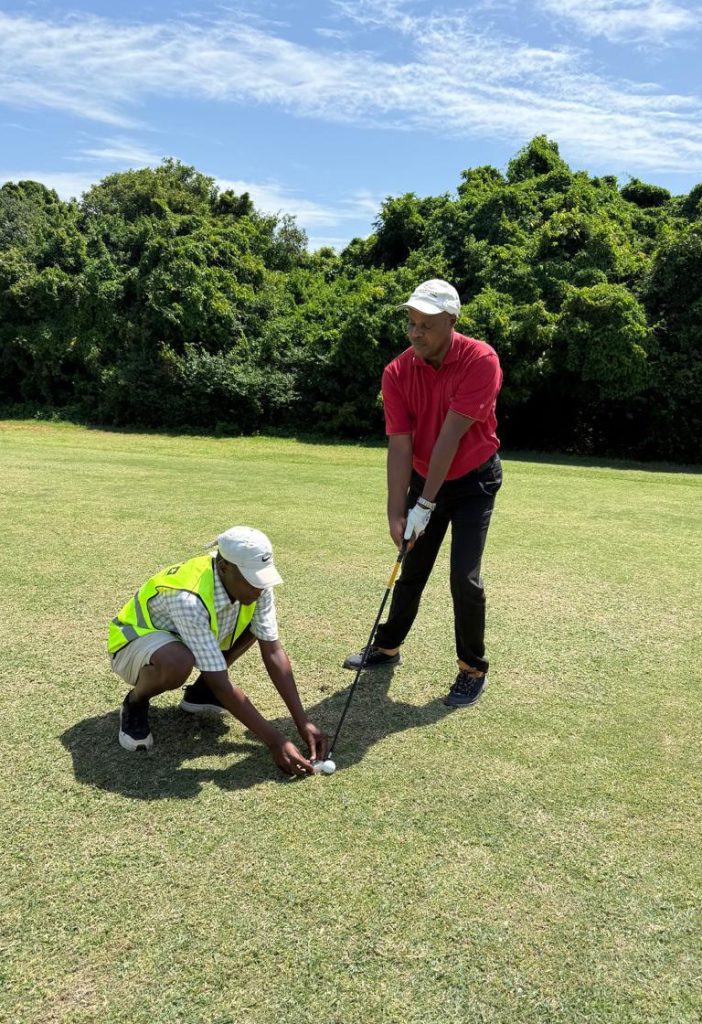
Yet this very demand transforms the game into something uniquely absorbing – a continuous exercise in cognition, judgment, and adaptation. Each shot becomes not merely a physical act, but the culmination of analysis and trust.
A Life Reframed
Kibaya’s journey into golf cannot be separated from the broader arc of his life. Losing his sight at 22 was a profound rupture, but one he met with determination. Rehabilitation at the Thika School for the Blind equipped him with tools for independence, while his intellectual discipline propelled him deeper into the study and practice of law.
Over time, he built a distinguished career as a legislative counsel, law lecturer, legal practitioner, chartered arbitrator and mediator, culminating in his appointment in 2021 as the first blind judge of Kenya’s Court of Appeal. Alongside this professional trajectory, he cultivated a rich personal life – as a husband, father, poet, author, and active member of his faith community.
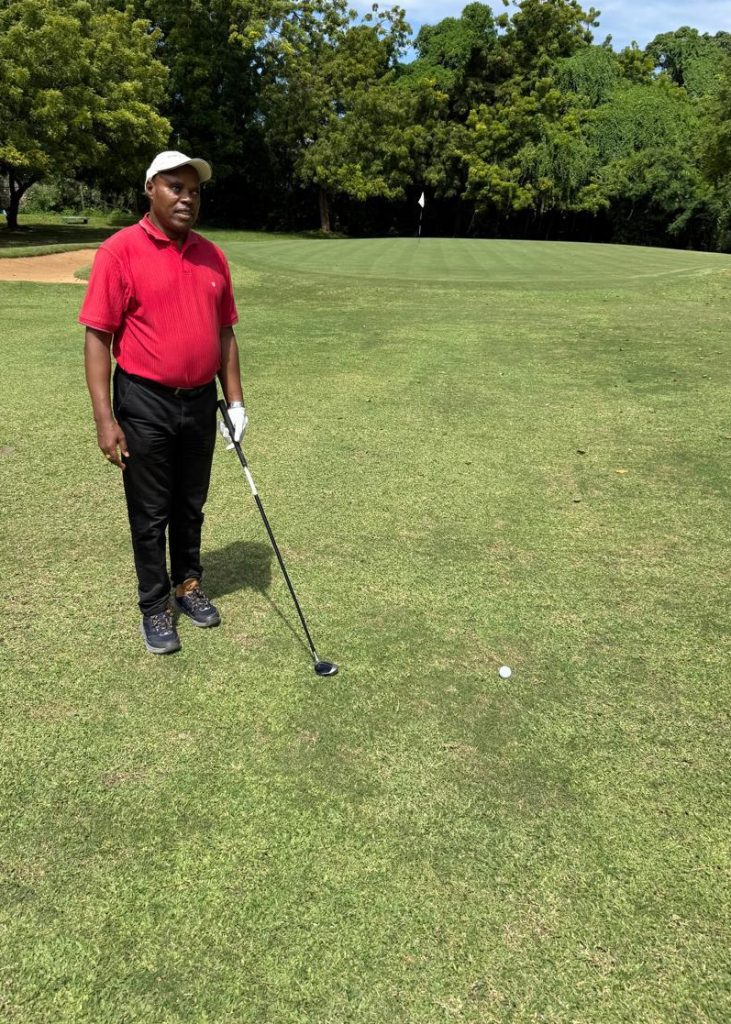
Golf entered this already full life not as a diversion, but as an extension – a new domain in which resilience, discipline, and imagination could find expression.
To his already remarkable curriculum vitae, he added a word still uncommon in Kenya, particularly among persons with disabilities: “golfer”.
The Game Within
Over the years, Kibaya reduced his handicap to an impressive 25, often teeing off at dawn to accommodate the demands of his judicial duties. Today, he plays less competitively, favouring instead the contemplative rhythm of a round shared with a friend – or undertaken alone.
“It takes you away from everything,” he says. “You are out there in the fresh air, the birds singing. I leave my phone in the car. I focus only on the game.”
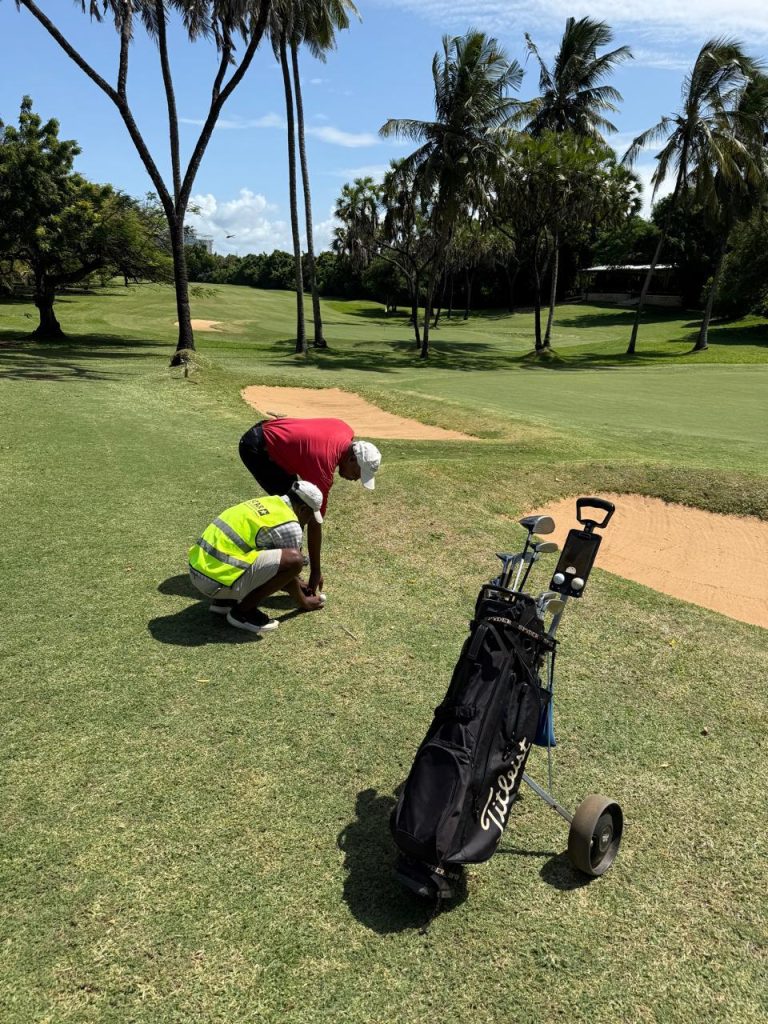
Golf, for him, is both refuge and discipline – a space where the mental demands of the courtroom yield to a different kind of concentration.
“You are competing only with yourself,” he reflects. “That is something quite refreshing.”
The physical benefits are real, but it is the cognitive and emotional dimensions that seem to resonate most deeply. Each step, each decision, each adjustment contributes to a continuous internal dialogue – one that is as much about presence as performance.
Expanding the Fairway
Kibaya is acutely aware of the rarity of his position. Blind golf remains largely invisible in Kenya, its growth constrained by limited awareness, resources, and structured pathways for participation.
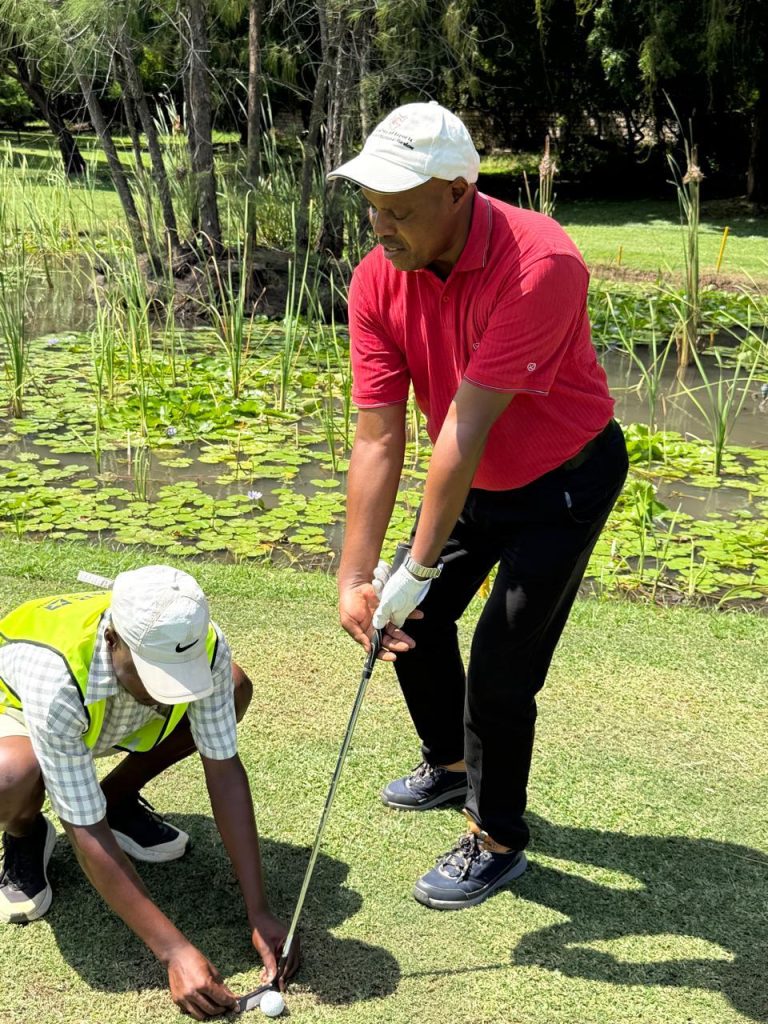
Yet there are signs of change. Initiatives such as Golden Tee Inclusive Golf, led by Nairobi-based educator Ann Irura, are introducing visually impaired youth to the game, providing access to equipment and opportunities to play. Clubs like Muthaiga have opened their doors, and there is cautious optimism about broader institutional support.
For Kibaya, the priority is continuity: ensuring that a first experience of golf leads to sustained engagement.
“No one should be left empty-handed after trying,” he notes. “There must be a structure to continue.”
Of great pride and excitement for Kibaya, he had just become the first Kenyan golfer who is blind to be registered by the International Blind Golf Association (IBGA), thanks to support from Golden Tee, and was set to represent his country in a tournament in South Africa later in 2026.
The Poetry of Precision
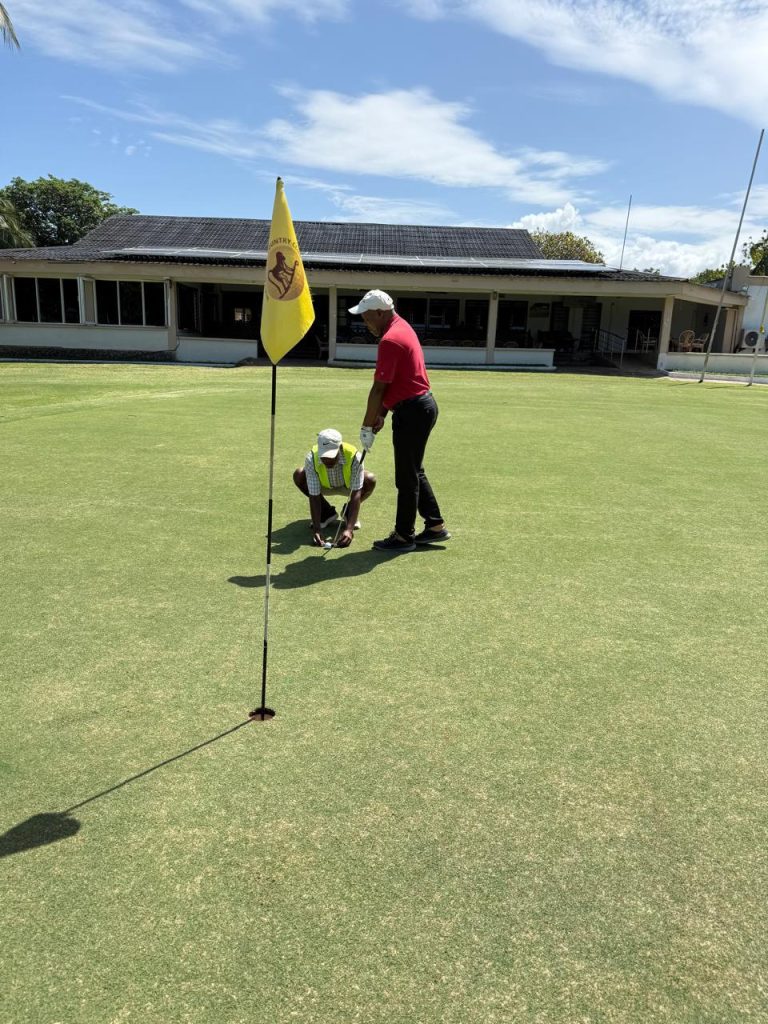
If golf is, as many claim, a game of fine margins, Kibaya approaches it with a poet’s sensitivity to nuance. Nowhere is this more evident than in his attention to the grip – the seemingly simple act that anchors the entire swing.
“It all starts there,” he says.
A recent adjustment – loosening the role of his left hand to guide rather than control – produced striking results.
“It was like magic,” he reflects. “A small change, but a profound difference.”
Such refinements capture the essence of his approach: patient, reflective, and attuned to the subtle interplay between intention and execution.
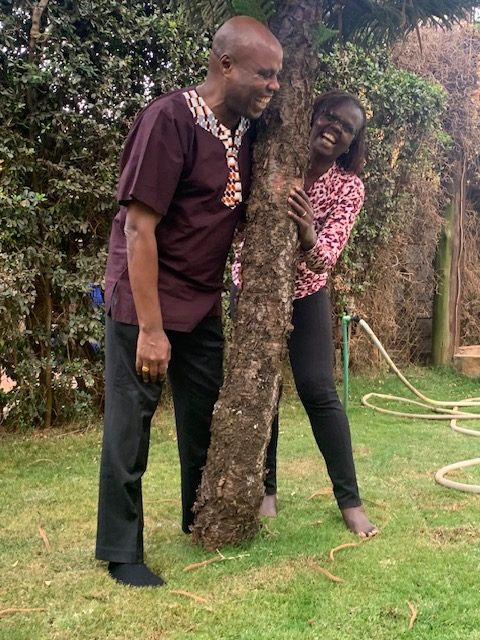
In the end, Kibaya’s journey in golf is not merely about adaptation; it is about reimagining possibility. It is a testament to the capacity to construct meaning – and mastery – beyond the limits of sight, guided instead by trust, discipline, and imagination.
And perhaps no expression of that journey is more fitting than his own words:
The Blind’s Mind Game
He stands where others see the green,
But paints the course in shades unseen –
A whispered map beneath his feet,
Of rolling fairways, trimmed and neat.
The wind describes the distant pin,
A hush of space, a world within;
Each hazard murmurs as he goes –
The bunker’s sigh, the water’s prose.
He walks the length with steady grace,
A briskened step, a measured pace;
The earth responds to sole and clab,
A living, breathing, shifting plane.
He sets his stance, aligns his will,
The world grows quiet, calm, and still;
The swing – a thought made clean and true,
The follow-through he somehow knew.
Distance is counted not by sight,
But rhythm felt and judged just right;
Each stroke a story, each putt a sound,
A listening art upon the ground.
And when the final cup is found,
No cheer of sight, no waving crowd –
Just quiet triumph, deeply known,
In courses where his game has grown.
– Poem courtesy of Dr Kibaya Laibuta
NB: When using any EDGA media, please comply with our copyright conditions