

Luck, love and golf:
Harris rediscovers the swing
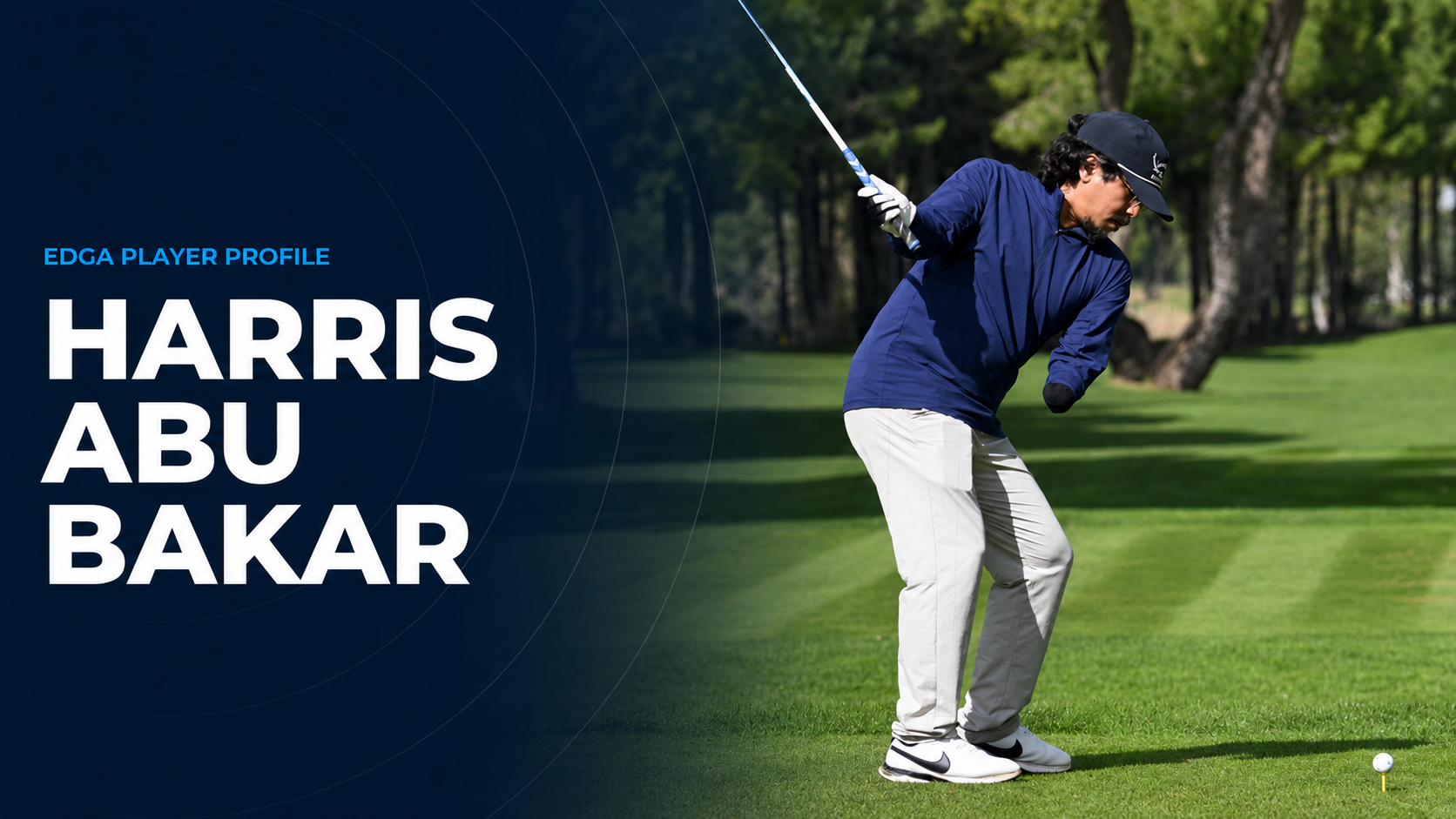
Every time he enjoys a round of golf, Harris Abu Bakar understands the sport has been an important part in his steady rehabilitation from a car accident in 2008 when his left hand was ripped away in an instant.
Harris’s family, and his own resilience and equanimity, helped him to cope with the physical and emotional trauma.
However, soon after the accident, this athletic young man of 24 from Malaysia, a fine rugby player, suddenly faced a considerable loss in his social and sporting life.
“During recovery I missed having both hands and I missed playing the sports I loved with friends,” explains Harris. “I was in search of something for the next chapter in my life.”
He remembered the fun of trying golf as a boy. “I started to feel that golf could be exactly what I needed.”
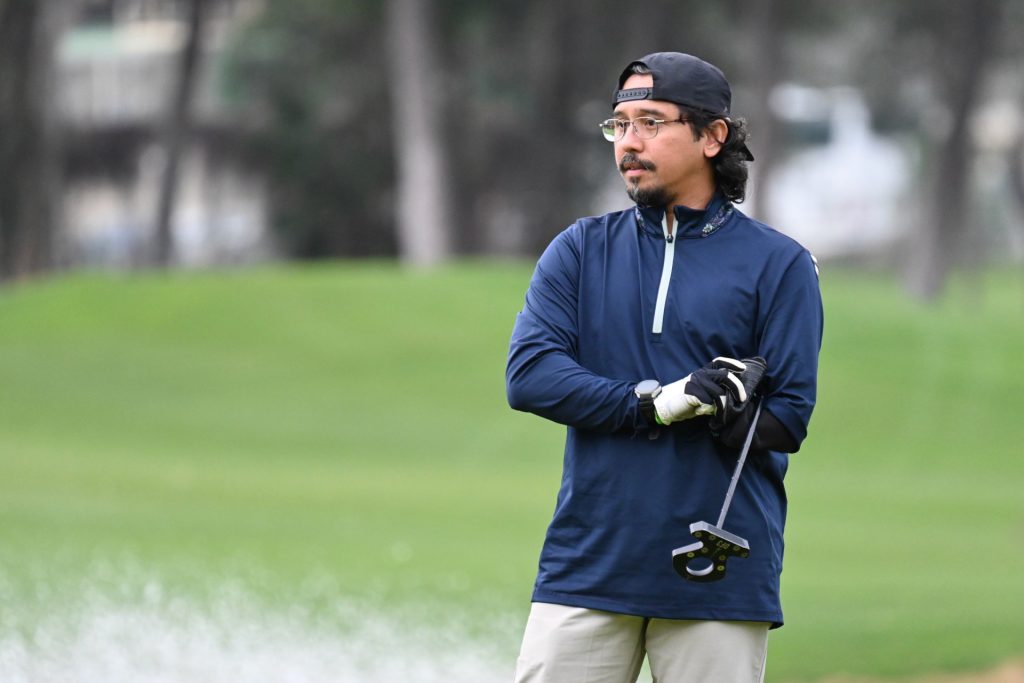
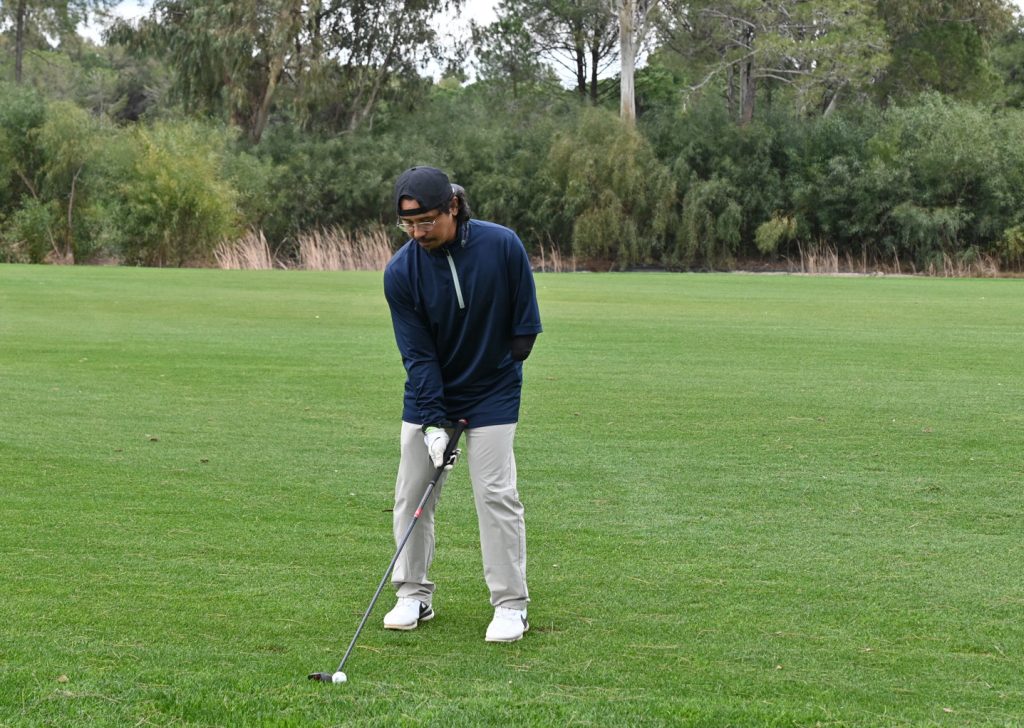
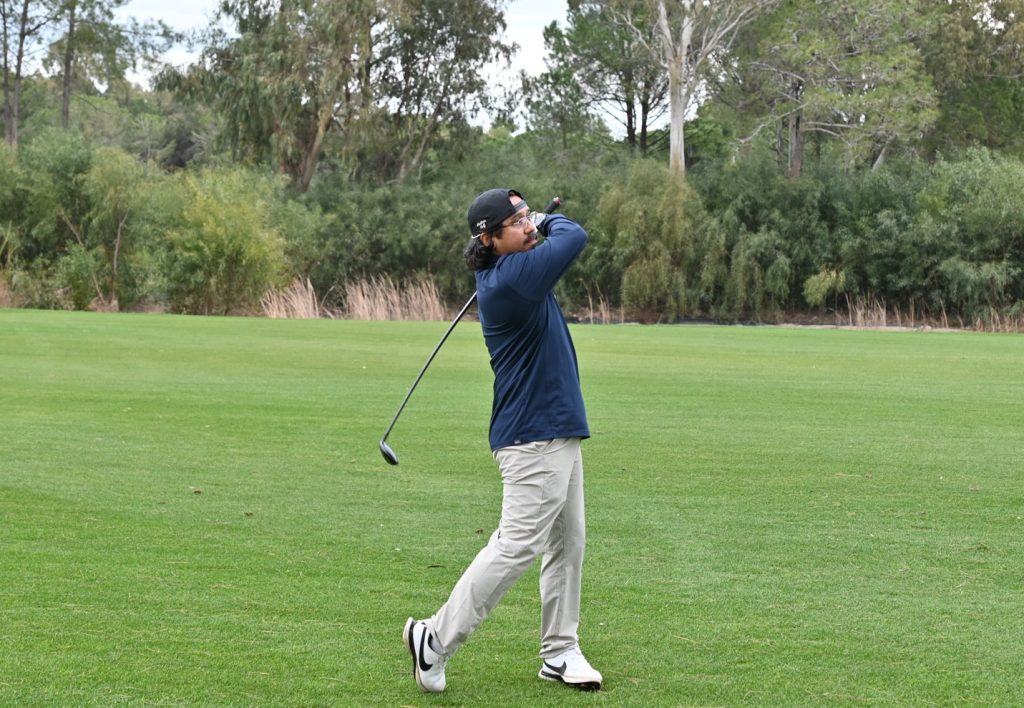
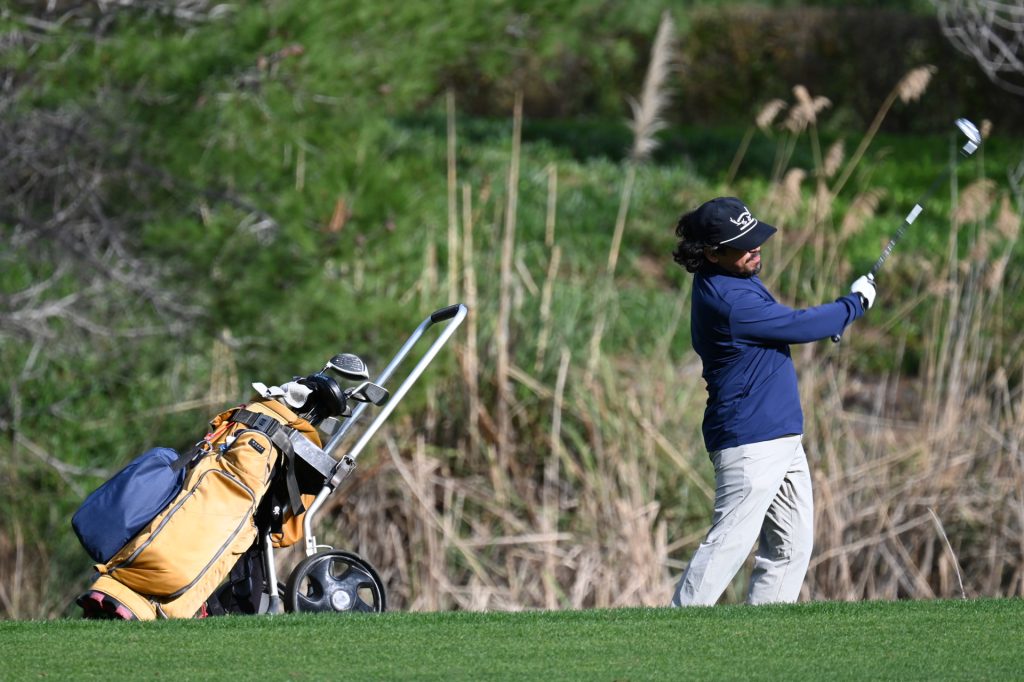
Harris put in some seriously hard work, re-learning golf technique in painstaking fashion, swinging the club with his right arm only in a ‘forehand’ movement, never blaming his accident for the inevitable struggles.
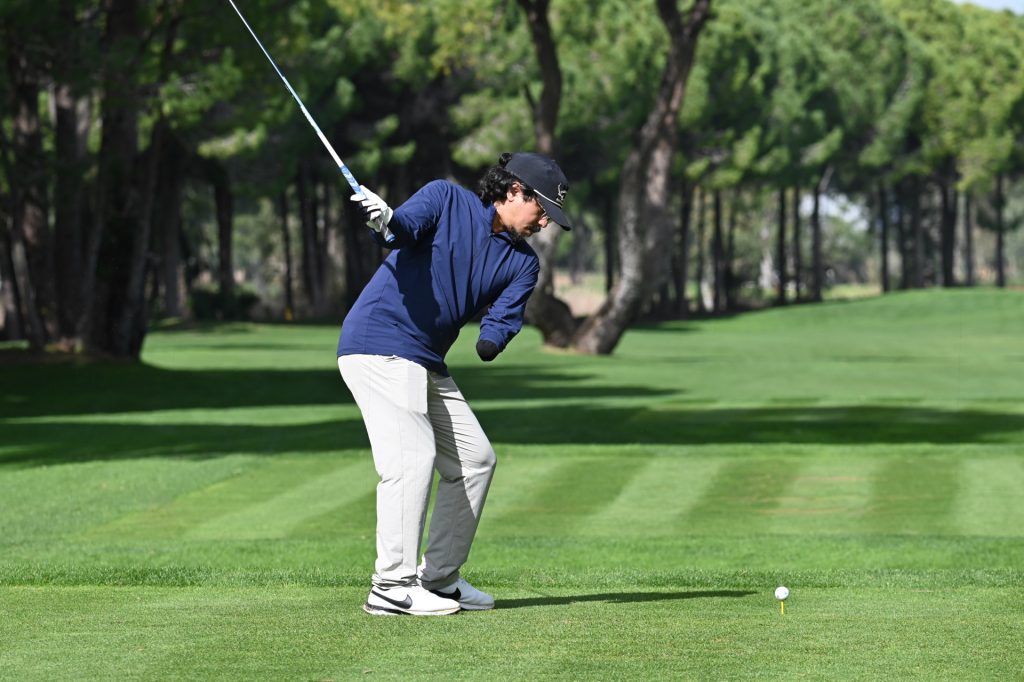
“I think it’s the best game that mankind ever invented,” he affirms with a smile. “Golf can restore a sense of independence and self-belief. The deepest benefit of golf for me goes far beyond sport. It sits at the intersection of identity, healing and purpose.”
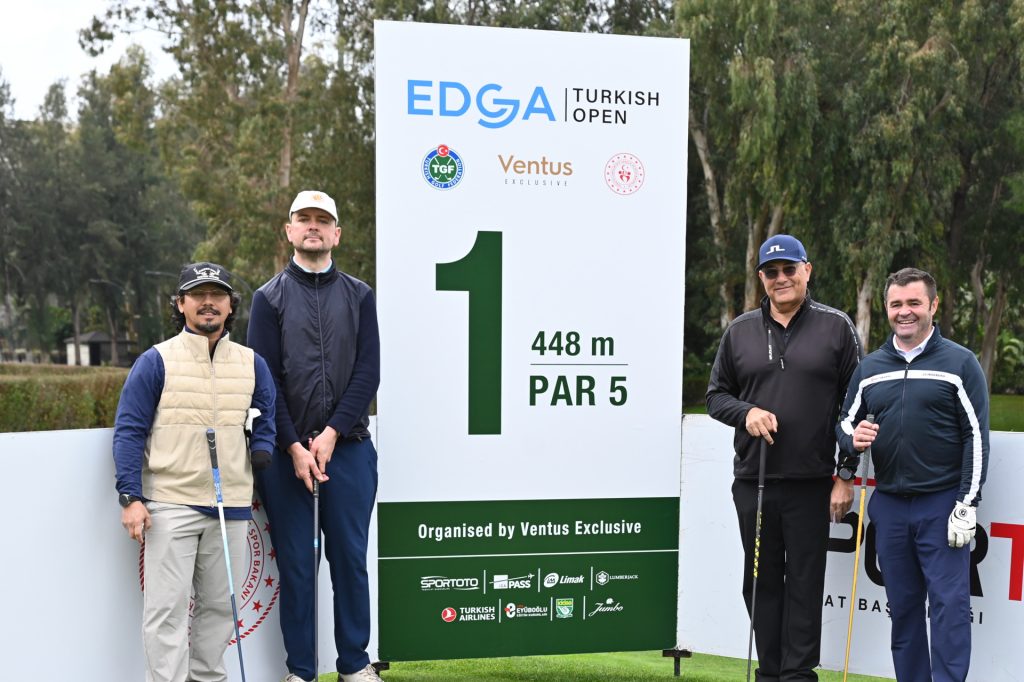
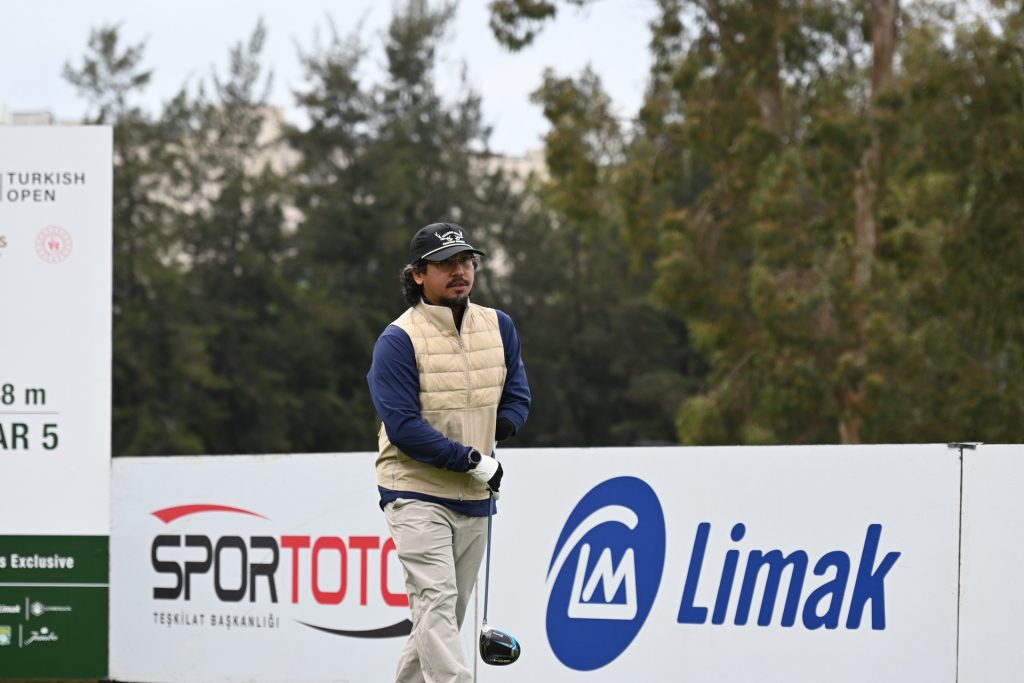
Today, aged 42, Harris loves every aspect of golf from the social side to competition, an area where he is testing himself at present. Harris recently took the plunge and flew 14 hours from Kuala Lumpur to take part in his first European G4D (golf for the disabled) tournament, the 2026 EDGA Turkish Open. This experience only reinforced his positive feeling for what is available for a golfer with a disability.
“In everyday life people sometimes see the disability before they see the person,” Harris says. “But here, everyone understood each other’s journeys. I wasn’t defined by my disability, I was simply me, Harris, another golfer competing and enjoying the game. The feeling of equality and belonging was something very powerful.”
Identity, healing and purpose
Harris explains: “Golf constantly humbles you while building your confidence and that cycle builds resilience, which mirrors my life story.”
A relaxed and articulate speaker, Harris has a ready smile that also suggests a mischievously deadpan sense of humour. He tells his story which is based around a great team, his family, but is also about fate, or luck (good and bad), the strange importance of the number eight; how we find the diamonds in the sky above us, and those below us, at our feet in the rough.
Harris was born and raised in Petaling Jaya, Selangor, Malaysia. His life changed on the eighth of August, 2008, or as it can be alternatively written, 08/08/08. The Chinese cultural belief has it that the number eight represents prosperity, luck, confidence, so that date in the calendar was selected as the day of the official opening ceremony of the 2008 Beijing Olympics, which would be watched by 3.5 billion people.
Harris was keen to be in that number, viewing at home on TV, but while getting a lift from his sister Sarah for this purpose at 5am in the morning, they were involved in a traffic accident: their car veered off the road into a storm drain (Selangor has an annual monsoon season), and as the car flew into this trap, Harris’s left arm was caught between the passenger side of the car and the concrete side of the drain.
“My hand was cut off immediately, and blood was gushing out like a broken pipe. I didn’t know that it could happen like that,” Harris says.
“I had to stop the bleeding. Somebody opened the door from the top, pulled my sister out, pulled me out and told us the emergency room of the University Hospital was conveniently just 10 metres away [Harris can’t help but use his dry sense of humour here]. I just rushed into the hospital. I had wrapped my shirt around my arm and put on some pressure. Thanks to the adrenaline, I could do all these things. I didn’t faint. It’s amazing what human beings can do.
“I remember it all so vividly. I called to my sister to bring my hand along so that hopefully it could be re-attached, I’d seen that in the movies or heard about it. They stopped the bleeding. I’d already lost a lot of blood. If the emergency room had been further away I don’t know what would have happened.
“They did so well. You can say that I’m happy with the medical situation in Malaysia, they are good at all this stuff.
“But the doctors decided that putting my hand back there would, in the end, be too complicated, therefore they had to cut a few inches more from my wrist area to ensure there would be no infection later. From that day onwards, I am a below-elbow (transradial) amputee: left hand.”
Harris adds: “After the accident, I don’t know if it’s a bad thing, but I didn’t cry, which could be seen as an issue. I don’t know, I was faced with a problem which I couldn’t express clearly to myself. I didn’t break down but I did look to adapt quickly. I wanted to make sure that I was okay rather than staying home and being stuck in a room and feeling sad. I went out, I went hiking in the forest first thing each day. I met my friends, just to see people, talk to people, see how they react when they see you. Yeah, so then I knew everything was fine. I am fine. Because of the society, I’m okay.”
The wooded hikes for Harris were important, still are. A place to reflect, calm himself, breathe and think ahead. His house backs on to a vibrant forest full of beautiful trees and flowers… and also monkeys. Harris laughs. “So we’ve got two tribes of monkeys. Sometimes there’s a monkey war. So when you see a different monkey one day, you know that the tribe has won the territory for that time.”
His appreciation of his family is immense, including his wife Farah who he has known since 2005 and married in 2016. “Farah has been there with me through thick and thin, giving me the help I needed. She was there when I had both arms and is still here giving me the support. And now we have our son Houd, who is aged five.
“Over time I realised that losing a limb does not mean losing your ability to live a full life. It simply means you have to adapt, learn new ways of doing things, and sometimes push yourself mentally in ways you never expected.
“It also gave me a different perspective on life, you begin to appreciate opportunities and experiences more deeply.
“My father, Abu Bakar and my mother, Afida, instilled in me the importance of perseverance and staying positive, even when life becomes difficult. That foundation became especially important when I had to face these unexpected challenges.”
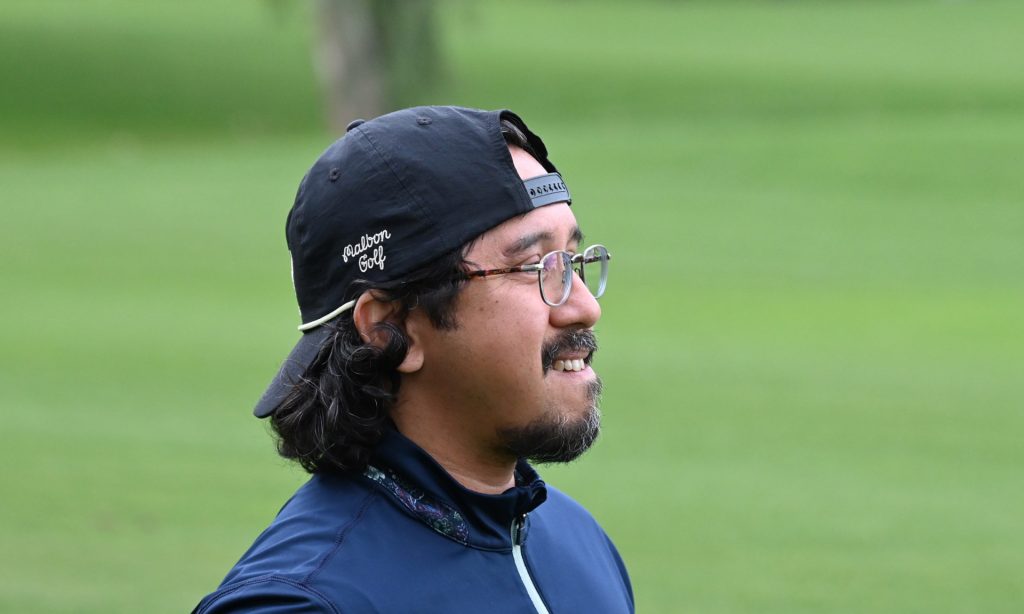
Harris adds: “In the beginning it affected almost everything. I used to be a ‘leftie’ especially in writing. When I had to start writing with my right hand, I thought I’ll just take my time adjusting, but when I had to sign important documents or bank cheques, my signatures were never consistent. Simple daily tasks suddenly became challenges, like putting on a watch. Over time I’ve developed new ways of doing things.
“And sometimes I had this feeling, that when people offered to do things, I just told them, ‘It’s okay. I can do it myself’. I don’t know if it’s a bad thing or rude, but I’d rather do it myself. I mean, it’s for me, isn’t it?”
His brothers and sister helped through their care and their shared humour. “Yes, with my parents they were there for me all the time. And if I felt like breaking down, they would say, ‘Don’t worry, this will go by’. But they would also say, ‘It could have been worse. You could have lost your head’, or other helpful stuff like that.”
If Mr and Mrs Abu Bakar – both former oil company executives who set up a business together to provide for their children – had hoped for talented, independent and supportive offspring, they got what they hoped for.
The siblings are a mutual support club brimming with imagination and energy, characters that Wes Anderson or JD Salinger might write onto the page.
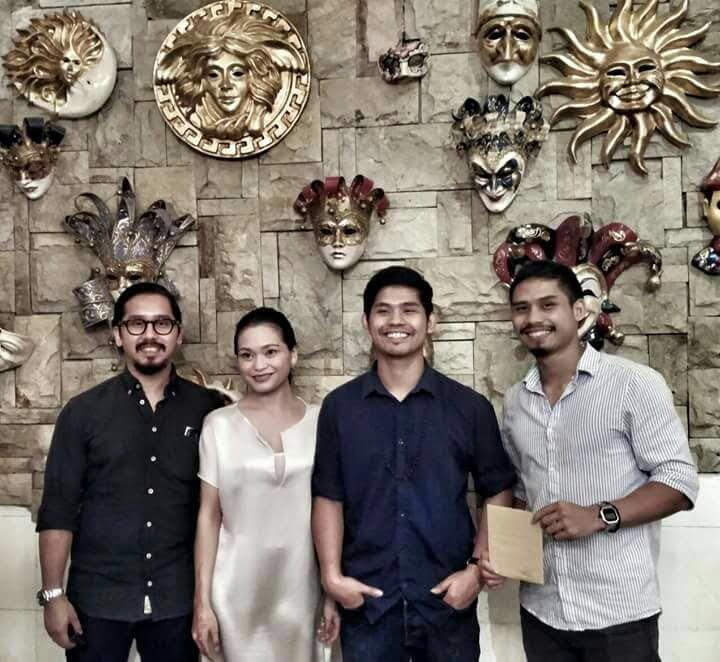
The eldest of four is Harris. His sister, Sarah Abu Bakar’s fluency in art and creativity have led her to become a respected writer, curator and consultant based in Kuala Lumpur. His brother Ariff Abu Bakar’s passion for music led him to sing and write music professionally, known in Malaysia and the UK (Ariff’s song “Fallen Asteroid”, surrounds the listener with “diamonds in the sky”: his siblings perhaps?). The youngest brother in the family, Aiman Abu Bakar, is a professional boxer and currently ranked number one in Malaysia at his weight. In video clips, when you see Aiman’s feet and hands moving in rhythm, you fear for the people who might meet him in the ring (as this article was being written, Harris was supporting his brother in Manila, the Philippines, where Aiman won the WBC Asia Super-Featherweight title to the family’s delight).
Harris is also convinced that the life lessons he learned at school helped him later deal with the accident’s aftermath. He went to a boarding school called ‘Kolej Tuanku Jaafar’ in Mantin, Negeri Sembilan, for five years.
“Learning to manage daily routines, your time, belongings without parental supervision, this instilled a sense of self reliance and accountability,” he explains.
“The school encouraged us to try different sports like rugby [Harris was a successful winger], football, tennis, hockey, cricket, handball, basketball and a try at golf. Sport was always a big part of my identity. I loved the discipline, energy, the teamwork, and the sense of pushing yourself physically and mentally.”
Later, after taking economics, finance and business at HELP University, Kuala Lumpur, Harris studied IT and industrial automation solutions, building up his own compact business mainly in the Asia region, including Indonesia and Thailand as well as Malaysia.
Farah meanwhile, apart from keeping an eagle-eye on their son Houd, is making lots of people happy by creating delicious cakes for special occasions through her thriving custom cake business Kek & Co.
Discovering a golf bag
When Harris was a young boy himself, he would see his father’s golf bag at home when Mr Abu Bakar was out at work. He would marvel at his Ben Hogan irons and a polished MacGregor persimmon wood, and carefully take them out and experiment. He recalls those moments today when he looks at the old pictures of his father enjoying the game.
A few months after the accident, Harris borrowed some of his father’s clubs and purchased his own driver, heading to the local practice range. “I just had to spend time figuring out adjustments in balance, swing mechanics, timing and what works for me. It became something therapeutic and meaningful.
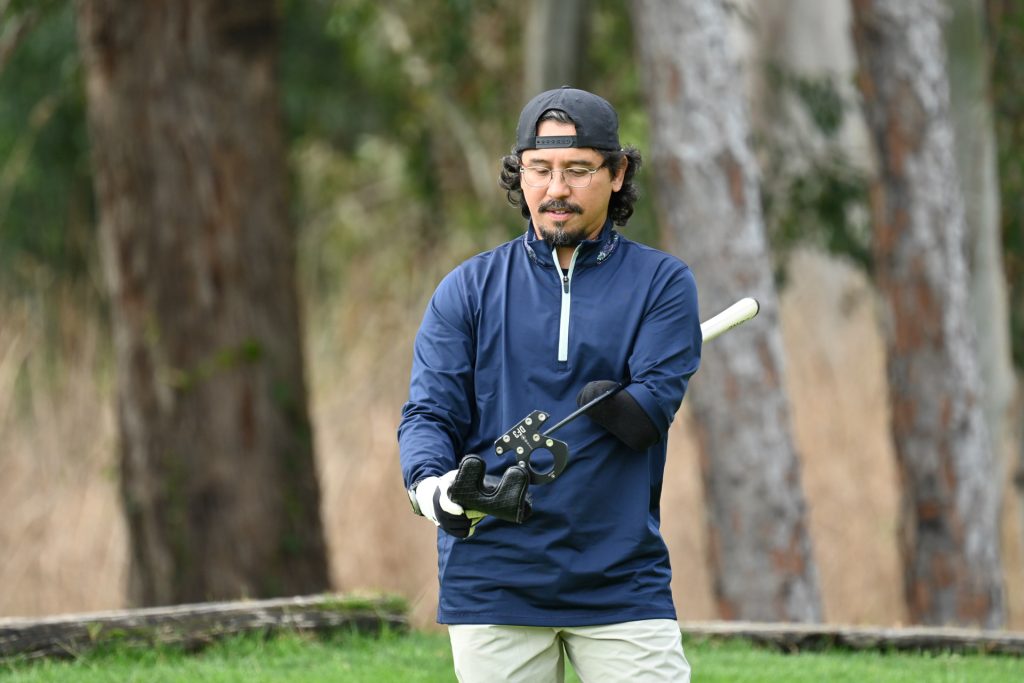
“I remember the first few solid shots I hit; that was the best feeling ever, and the mission was, let’s make this repeatable and consistent. It reminded me that limitations are often problems waiting to be solved. That moment gave me confidence that I could continue improving.”
With his IT business growing steadily and after his son Houd was born, golf inevitably went back on the shelf for a while, until Covid-19 came along. Being a technophile, online golf games got Harris’s mind working about possibilities.
“During the lockdown if I wasn’t playing ‘Call of Duty’ like everyone else, I played the 2k21 golf game on the Playstation. The game offers several benefits that can translate to real life golf, ranging from improved course management and strategy, understanding rules and club selection. It’s great for beginners too.”
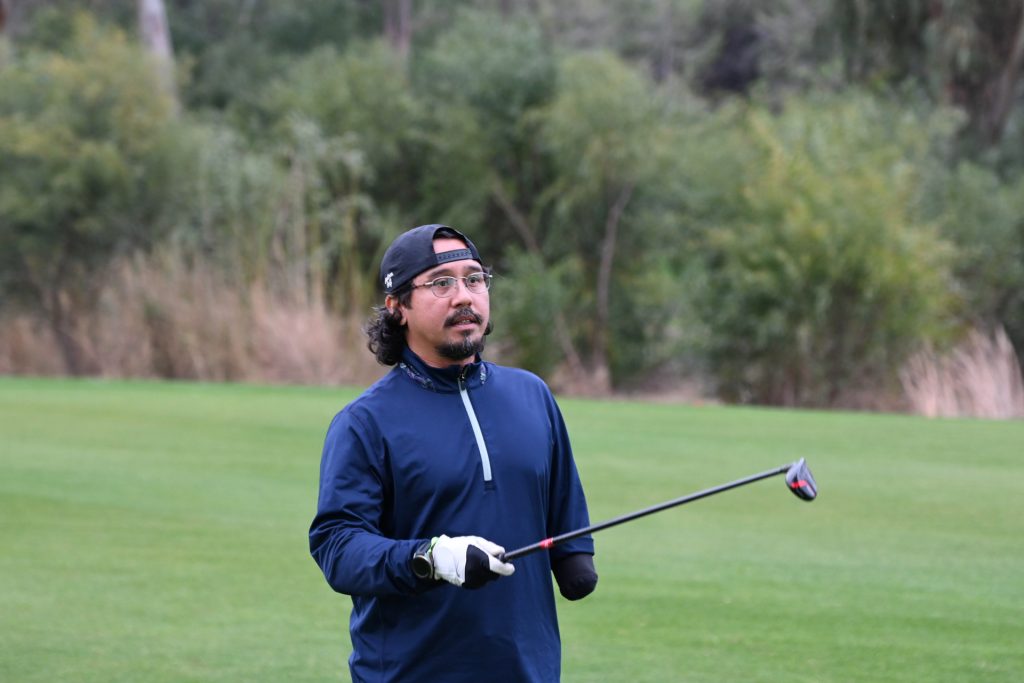
Harris started visiting golf simulators regularly to practise his swing. He felt he needed to do this to build confidence before playing on the course again, and says that a real fear for him was that playing with one arm and taking too long on the course would hold people up. He just wasn’t comfortable with that.
Later, thanks to a new golf booking app he found called ‘Deemples’, he was able to book games with friends and also “randoms” (golfers you meet for the first time).
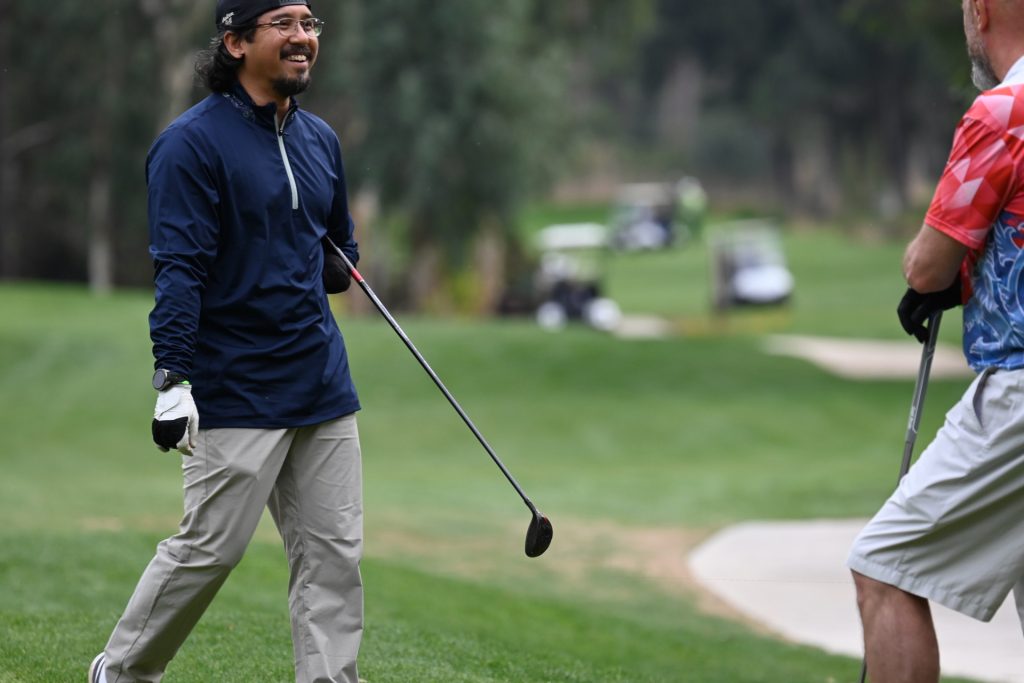
Harris says: “Zaq, one of my oldest friends who I used to hit shots with in school, rejoined me on the golf journey. After school, we had kept in touch when we could, but only now, after starting golf again, we get to meet up and spend quality time together golfing. Golf became the unexpected re-connection. We also get to connect again with old friends that we have not seen in ages, all through golf.”
Harris also loves playing in his own company. “When you’re on the golf course, surrounded by nature, focusing on the next shot, everything else just fades away.”
In competition, Harris’s first G4D tournament was in Japan for the 3rd Japan Grand Prix Open Championship for People with Disabilities, in June 2025, and he loved taking part.
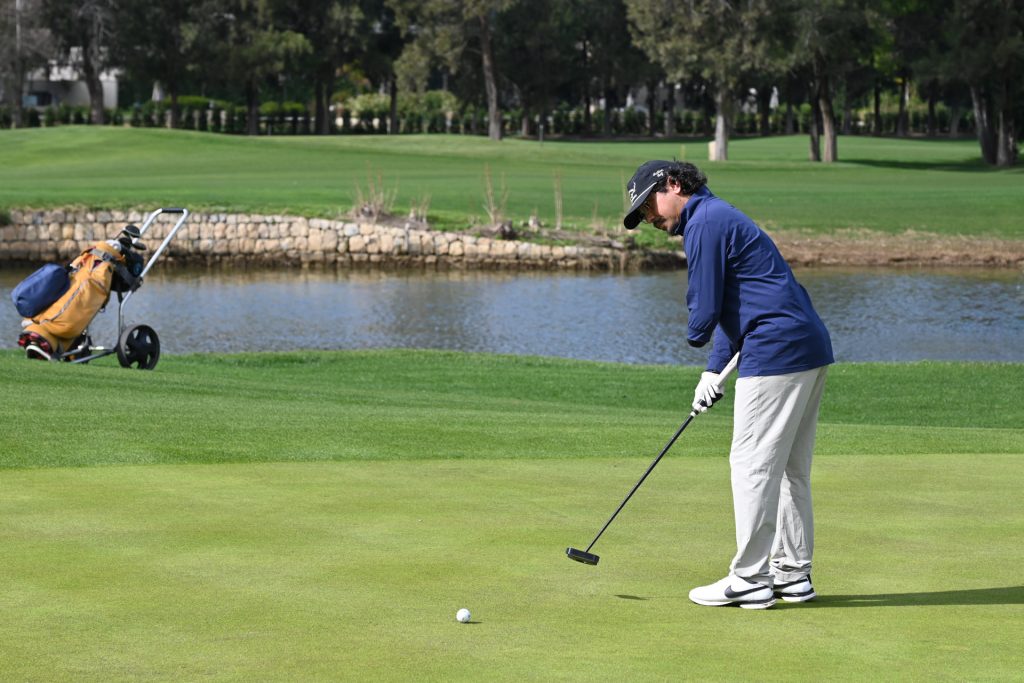
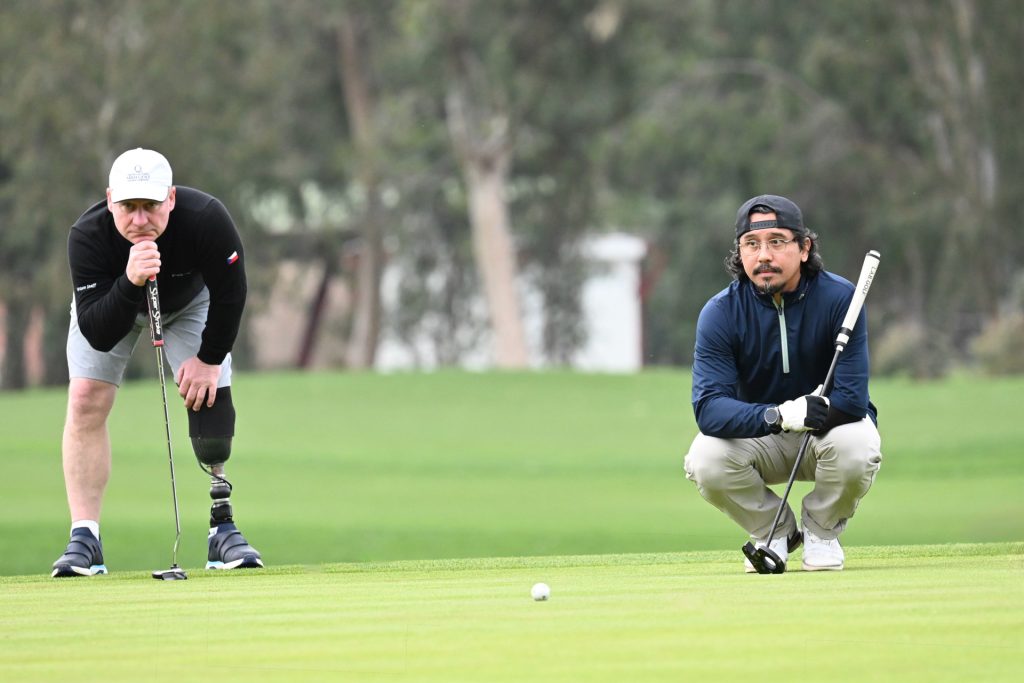
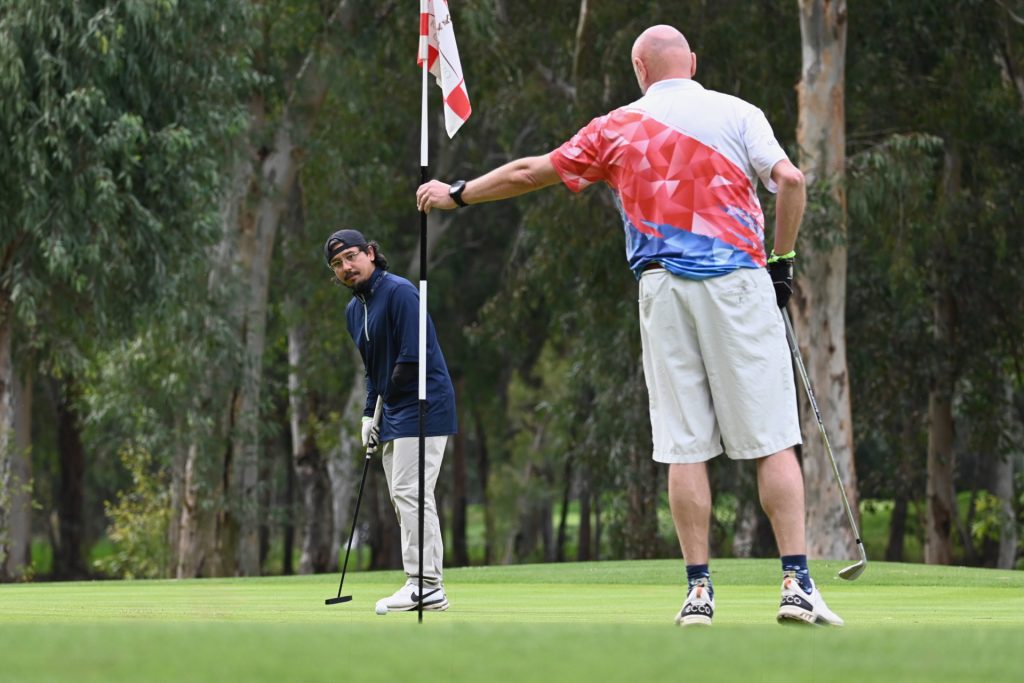
“The EDGA Turkish Open was then my first international G4D tournament with EDGA and far away from home. It was an unforgettable experience, a great introduction for me.
“Being surrounded by players from around the world who have different disabilities but share the same passion for golf was inspiring. The level of positivity among the players was something special to witness. It really showed me how powerful sport can be in bringing people together; in this case sharing the same hotel where players and EDGA team members had breakfast, lunch and dinner together like a big happy family. Everyone was so friendly.”
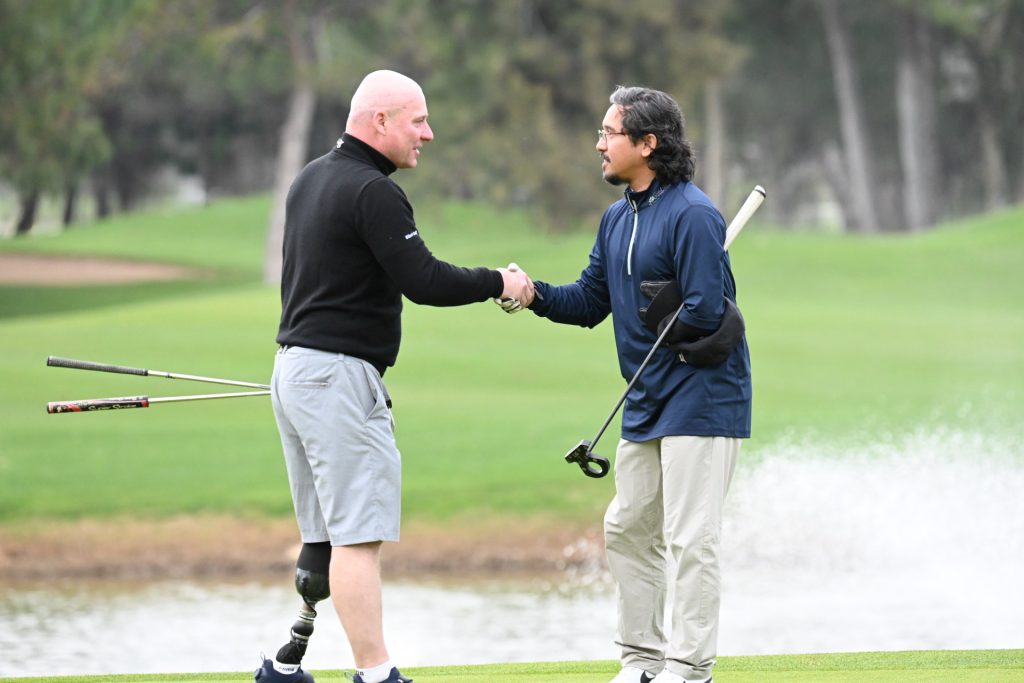
Harris adds: “In these events, everyone has their own journey and their own stories. So I know that the other guy who maybe doesn’t have a leg will have his own story and everybody understands that we are all on a journey together and everyone is there to compete and at the same time have a good experience.
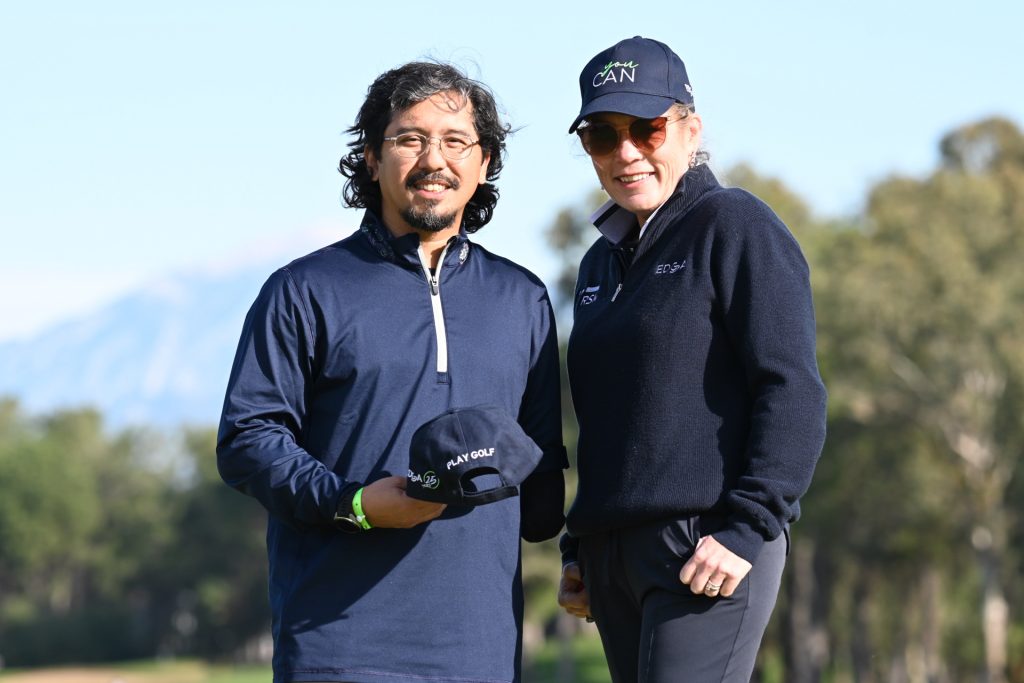
“Golf has a unique way of capturing you. The challenge, the patience required, the constant pursuit of improvement. You are always trying to become a better version of the player you were yesterday. For me it quickly became something deeper than just hitting a ball. It gave me peace, identity, purpose. It became not just a game, but a path.”
Who inspires Harris?
From here, Harris hopes to play a role in growing G4D in Malaysia and across Asia. “I’d love to see more opportunities for golfers with a disability, more platforms where people can experience the joy of the game.
“When I was a kid, my father was my first golfing hero. I watched him practise at the range, where his shots were effortless, pure and had great contact (with vintage clubs). I saw photos of his early golfing days, travelling and playing famous courses; this inspired me.
“Today I admire many great golfers, but my real inspiration comes from the players in the adaptive, G4D golf community. Seeing individuals overcome incredible challenges and still compete with passion is extremely motivating. Those are the kinds of stories that truly encourage me.
“I just want to raise awareness that this kind of golfing exists. There’s a community out there playing golf and having a fun time. If you are soul-searching, looking for a purpose, I guess this is where you can look.”
There are diamonds to be found, for sure, Harris knows, you just have to look.
NB: When using any EDGA media, please comply with our copyright conditions